Oxford Street pedestrianisation begins on Monday 26 October 2026, when buses, taxis, cycles and other vehicles are banned from the 1km stretch between Orchard Street and Great Portland Street. On 5 October the London public-realm practice East published the first images of its design for that section: a line of trees in large planters down the middle of the street, and pale new paving where the carriageway was. The street the mayor calls the nation's high street is about to become a plaza, first in temporary form and then for good.
Key takeaways
- The date: the first phase, a 1km stretch either side of Oxford Circus from Orchard Street to Great Portland Street, closes to vehicles on 26 October 2026.
- The design: East's images show trees in giant planters running west from Oxford Circus and cream-and-grey paving. Seating and tree-lined public spaces are due by spring 2027.
- Temporary first: the early changes are temporary, so the Mayor's office can collect data on how people use the space before the permanent design is fixed.
- The team: East with Publica and Gehl on the first phase; Hawkins\Brown, Urban Movement and the landscape practice Aspect Studio on a concept for the full street from Marble Arch to Tottenham Court Road.
- The politics: Westminster City Council, which blocked pedestrianisation in 2018, says it still has "a long list of unanswered questions".
What happened: East's first images
The Architects' Journal reported on 6 October that East had published its visuals on LinkedIn the day before. East and Hawkins\Brown were picked in 2025 from the Mayor of London's Architecture and Urbanism Framework to lead the public-realm work. East's director, Dann Jessen, called the first phase "a dream project", and said Londoners would be invited to test and review the work as it moves through "transitional stages" in the coming months.
Building Design described the images on 8 October: a row of trees in giant planters down the centre of the street west of Oxford Circus, more trees flanking the road in the distance, and cream and grey paving in place of the asphalt, filled with shoppers. The AJ notes that East is working with two urban design firms, the London studio Publica and Gehl, whose past work includes the overhaul of Times Square in New York.
The timetable was set on 28 September, when the Mayor, Sadiq Khan, announced the 26 October date, "just in time for the busy Christmas shopping period", as he put it.
The Oxford Street pedestrianisation plan
The legal ground was laid earlier in the year. In March the Mayor's office set out the rules for the stretch between Orchard Street and Great Portland Street. Private vehicles, buses, taxis and private hire vehicles, cycles, scooters and pedicabs will all be excluded. Emergency services keep access at all times, and delivery vehicles can serve shops from midnight to 07:00. The same release promised substantial trees and greenery, more seating and rest areas, good lighting, CCTV, and a street able to host sporting, cultural and festive events. It calls Oxford Street the flagship destination of London's Central Activities Zone, with an estimated annual contribution of £22.75bn.
The project is run by the Oxford Street Development Corporation, a mayoral body that, according to the AJ, was set up in January 2026 to push it forward. City Hall's consultation found 69% of respondents backing the plans and 66% backing pedestrianisation specifically. The BBC has reported the scheme's cost as £150m.
East's section is only the start. Hawkins\Brown, working with the transport designers Urban Movement and the landscape practice Aspect Studio, has drawn a concept for the whole street, from Marble Arch to Tottenham Court Road, which could become later phases. A 23-member design review panel, co-chaired by the architects Simon Henley and Paul Monaghan, will advise the corporation.
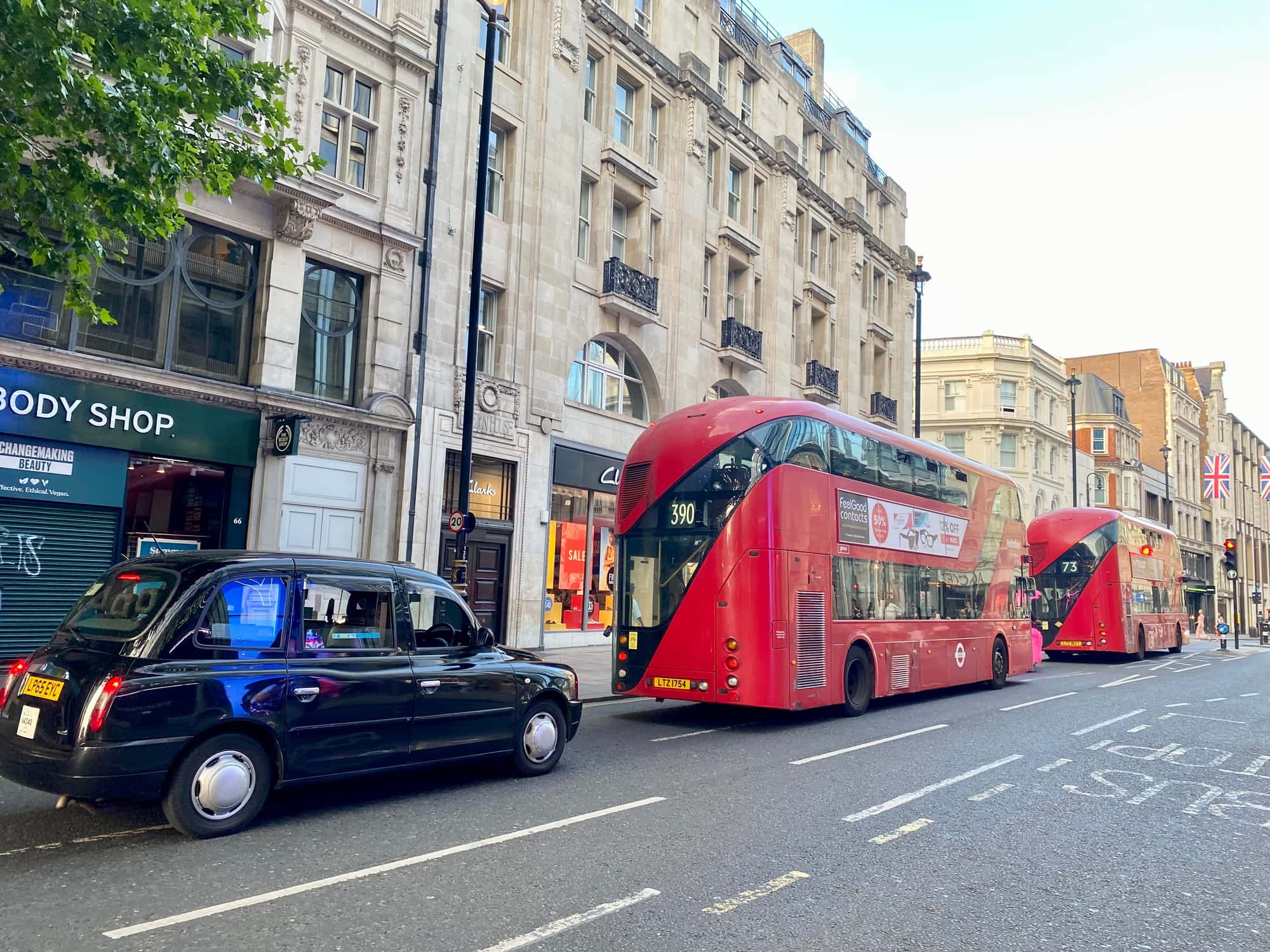
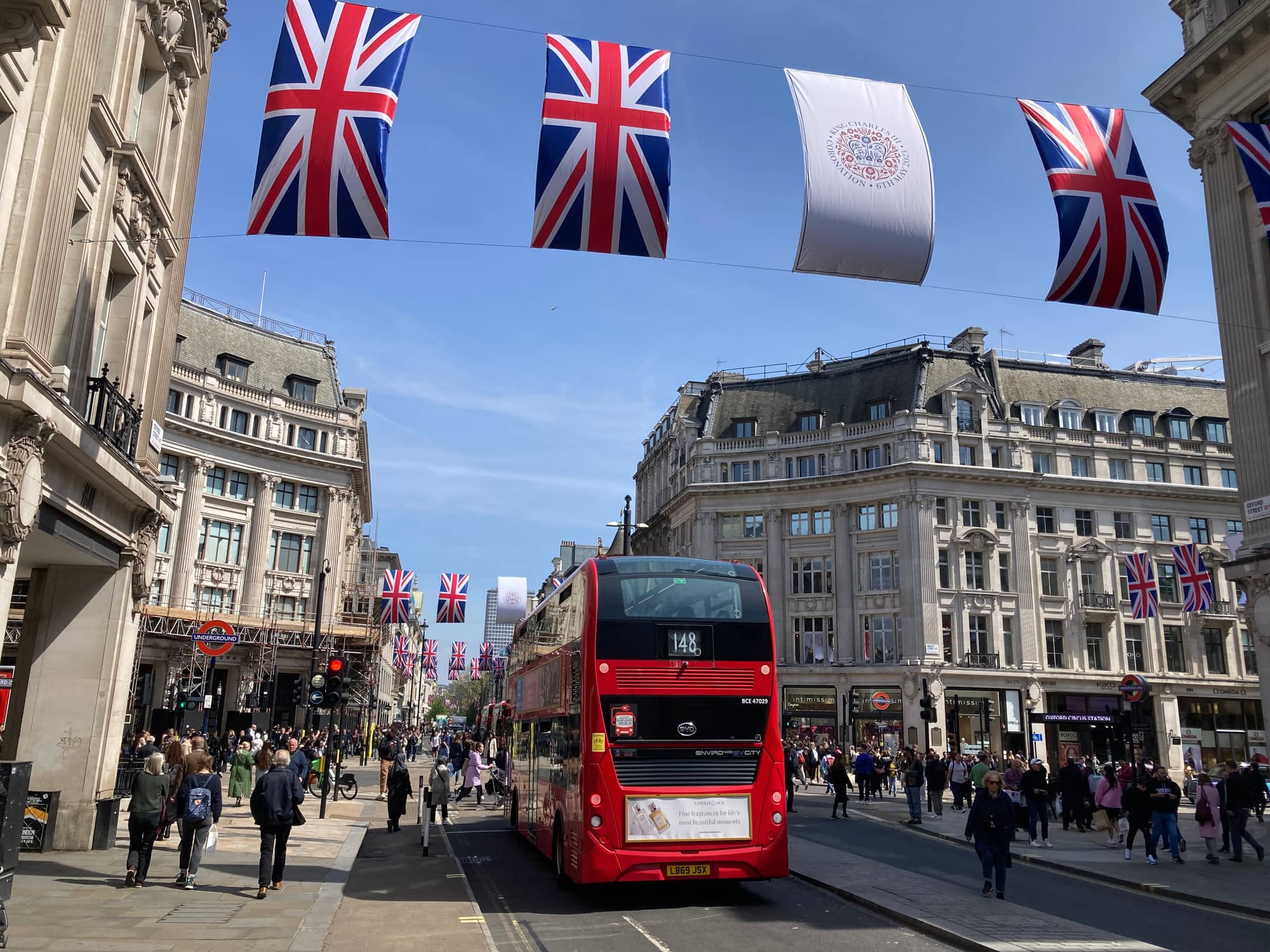
Why it matters: a street that has to be a room
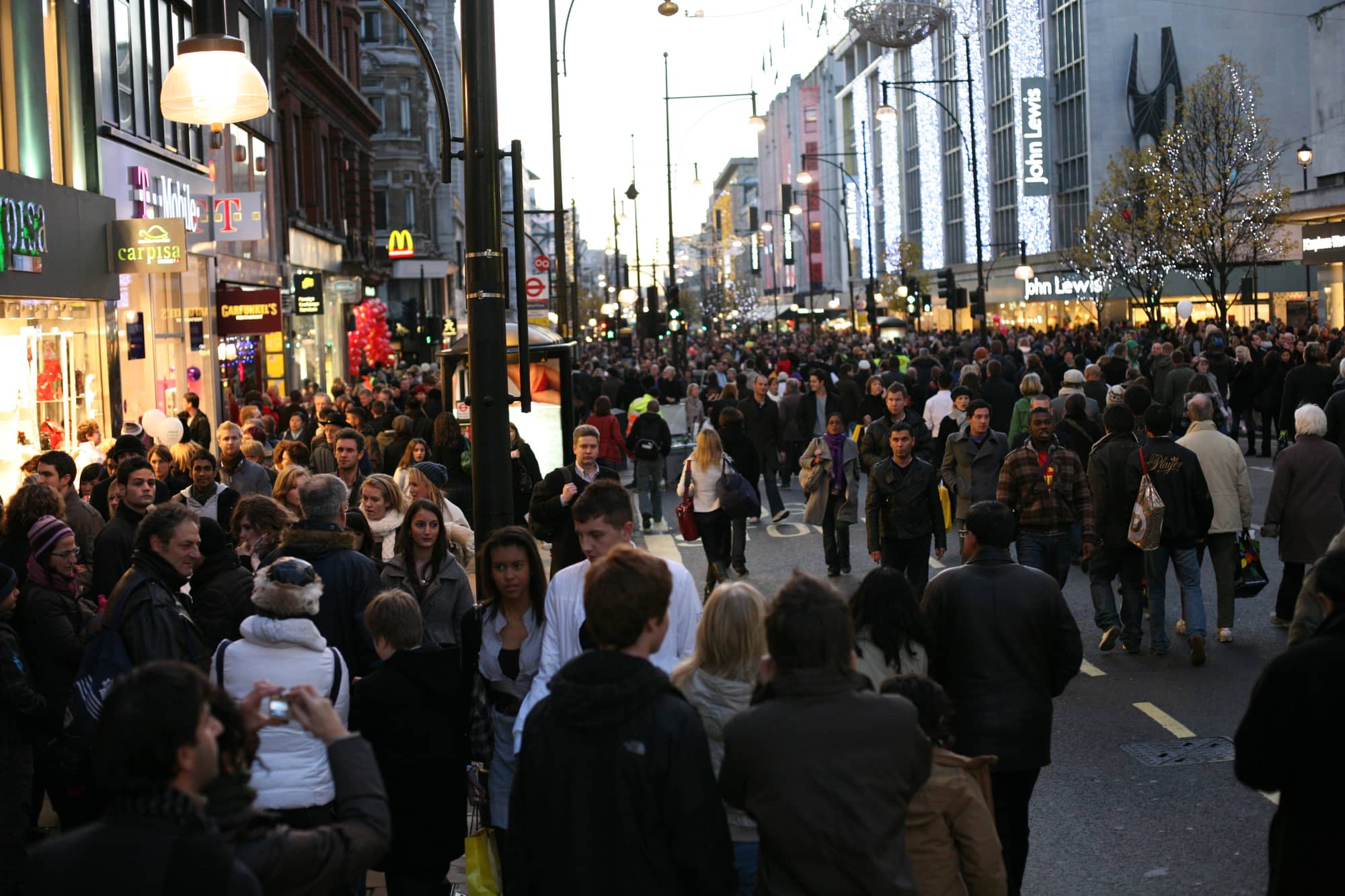
Pedestrianising a shopping street is easy to draw and hard to design. Take the traffic out of Oxford Street and what is left is a corridor about the width of a road, lined by department stores, with nothing in it. The photograph at the top of this story, from a car-free day in December 2008, shows the first version of the answer: people fill the space themselves. But that was one Saturday before Christmas. On a wet Tuesday in February the same street needs a reason to linger.
That is what East's planters and paving are for. A central line of trees divides a wide street into two narrower, more comfortable halves, gives shade, and puts something at human height between the facades. New paving across the full width removes the kerb, which is the strongest signal a street can give about who it belongs to. The method matters as much as the objects: the Mayor's office says the temporary first phase is there to gather data and feedback on how people use the space before anything is made permanent.
The risk is the one Westminster raises. Councillor Tim Barnes, the council's deputy leader, told the BBC that traffic "will be pushed to the small streets nearby causing economic and environmental harm", and the council has asked for answers on access, air pollution, street cleaning and public safety. A pedestrian street is only as good as the streets around it. Diverted buses, taxis and deliveries are the hidden cost of a plaza on Oxford Street, and the design of the streets that take them will matter as much as the planters.
The comparison closer to home is a reminder that the street is the real public space. The Journal's Thompson Center redesign story is about a building that made its atrium into a public room; Oxford Street is trying to make a whole high street into one. And the Zaha Hadid Foundation, opening in Clerkenwell, shows the other London tactic: reusing buildings, rather than streets, as civic space.
From the studio
The test of the temporary phase is how quickly it is allowed to change. Planters can move; paving can be painted before it is laid in stone. If the corporation really treats the next year as an experiment, publishing what the counts show and adjusting, it will have done something rare in a big public project: designed with the people who use the street, not just for them. Students of urban design should watch the data as closely as the drawings, the same way the Journal's explainer on missing middle housing argues for judging housing laws by what they actually produce.
What's next
- Monday 26 October 2026: Oxford Street closes to vehicles between Orchard Street and Great Portland Street.
- Autumn and winter 2026: temporary layout in place; data and feedback collected; Londoners invited to test and review.
- Spring 2027: new seating and tree-lined public spaces due, according to the AJ.
- Later phases: Hawkins\Brown's concept for the full street to Marble Arch and Tottenham Court Road.
More London stories are under the Journal's London tag, and more on streets, housing and cities in Urbanism.
FAQ
When is Oxford Street being pedestrianised?
Oxford Street is being pedestrianised from Monday 26 October 2026, when vehicles are banned between Orchard Street and Great Portland Street. New seating and tree-lined spaces are due by spring 2027.
Which part of Oxford Street will be pedestrianised?
The first phase of Oxford Street pedestrianisation covers about 1km between Orchard Street and Great Portland Street, either side of Oxford Circus. A concept for the full street, from Marble Arch to Tottenham Court Road, could form later phases.
Can buses and taxis use Oxford Street after pedestrianisation?
Buses, taxis, private hire vehicles, cycles, scooters and pedicabs cannot use the pedestrianised section of Oxford Street. Emergency vehicles keep access at all times, and delivery vehicles may enter from midnight to 07:00.
Sources
- East presents new visuals of Oxford Street pedestrianisationThe Architects' Journal
- East unveils first images of Oxford Street pedestrianisationBuilding Design
- Oxford Street to be pedestrianised from 26 OctoberBBC News
- Mayor confirms next steps to make world-famous Oxford Street traffic-free by the end of this summerMayor of London
- Oxford Street: council clashes with TfL over pedestrianisationBBC News