Missing middle housing is the range of house-scale buildings that hold several homes each: duplexes, fourplexes, courtyard buildings, townhouses and, in Los Angeles, the bungalow court. They sit between the detached house and the apartment block. They are "missing" because, across most of the United States, they have been largely illegal to build since the mid-1940s. California is now re-legalising them, law by law.
Key takeaways
- The term was coined in 2010 by Daniel Parolek of Opticos Design, who defines it as multi-unit buildings that match the scale of single-family houses in walkable neighbourhoods.
- LA invented one of the types. The bungalow court began in Pasadena in 1909, and courts were Southern California's main form of multi-family housing from the 1910s to the 1930s.
- Zoning removed them. According to LA City Planning, 72% of the city's land that permits housing is restricted to single-family homes.
- The law is changing. SB 9 (in effect since 1 January 2022) allows two homes and a lot split on single-family lots. SB 79 (since 1 July 2026) allows taller housing near transit, and Los Angeles has answered with a Low-Rise Ordinance near 57 stations.
What is missing middle housing?
Missing middle housing is defined by scale, not by style. A building qualifies if it looks and sits like a large house — similar height, footprint and setbacks — but contains two to roughly a dozen homes. Opticos catalogues nine types:
| Type | What it is |
|---|---|
| Duplex (side-by-side or stacked) | Two homes in one house-sized building |
| Triplex and fourplex (stacked) | Three or four flats on separate floors |
| Cottage court | Small detached houses around a shared garden (LA's bungalow court) |
| Courtyard building | Flats around a courtyard, entered from it |
| Townhouse | Attached houses, each with its own front door |
| Multiplex (medium) | Up to about a dozen homes in a large, house-like building |
| Live-work | A shopfront or workshop with a home above |
Opticos says these buildings typically hold between two and twelve homes per lot. Their density comes from sharing walls, roofs and gardens rather than from height, which is why they can be added to a street of houses without changing its character.
Why is it called missing middle housing?
Opticos puts it directly: the types are called "missing" because "they have typically been illegal to build since the mid-1940s", and "middle" because they sit between single-family homes and mid- to high-rise apartments. After the Second World War, zoning across the country set aside most residential land for detached houses, and the types that once filled pre-war neighbourhoods stopped being built.
Parking rules finished the job. Opticos gives the arithmetic: at two spaces per home, a fourplex needs eight, which "would never fit on a typical residential lot". It recommends no more than one space per home. Missing middle is as much a car-storage problem as a design problem.
The bungalow court: Los Angeles's own missing middle
If any city can claim the missing middle, it is Los Angeles. The City of Pasadena describes itself as generally credited as the birthplace of the bungalow court. The first was St. Francis Court, built in 1909 by Sylvanus Marston on East Colorado Boulevard: eleven bungalows with gardens and a central driveway. Bowen Court, by the brothers Arthur and Alfred Heineman in 1911, is the largest and the oldest to survive in its original layout, with 23 buildings on 1.5 acres. Pasadena counted 116 courts in 2014.
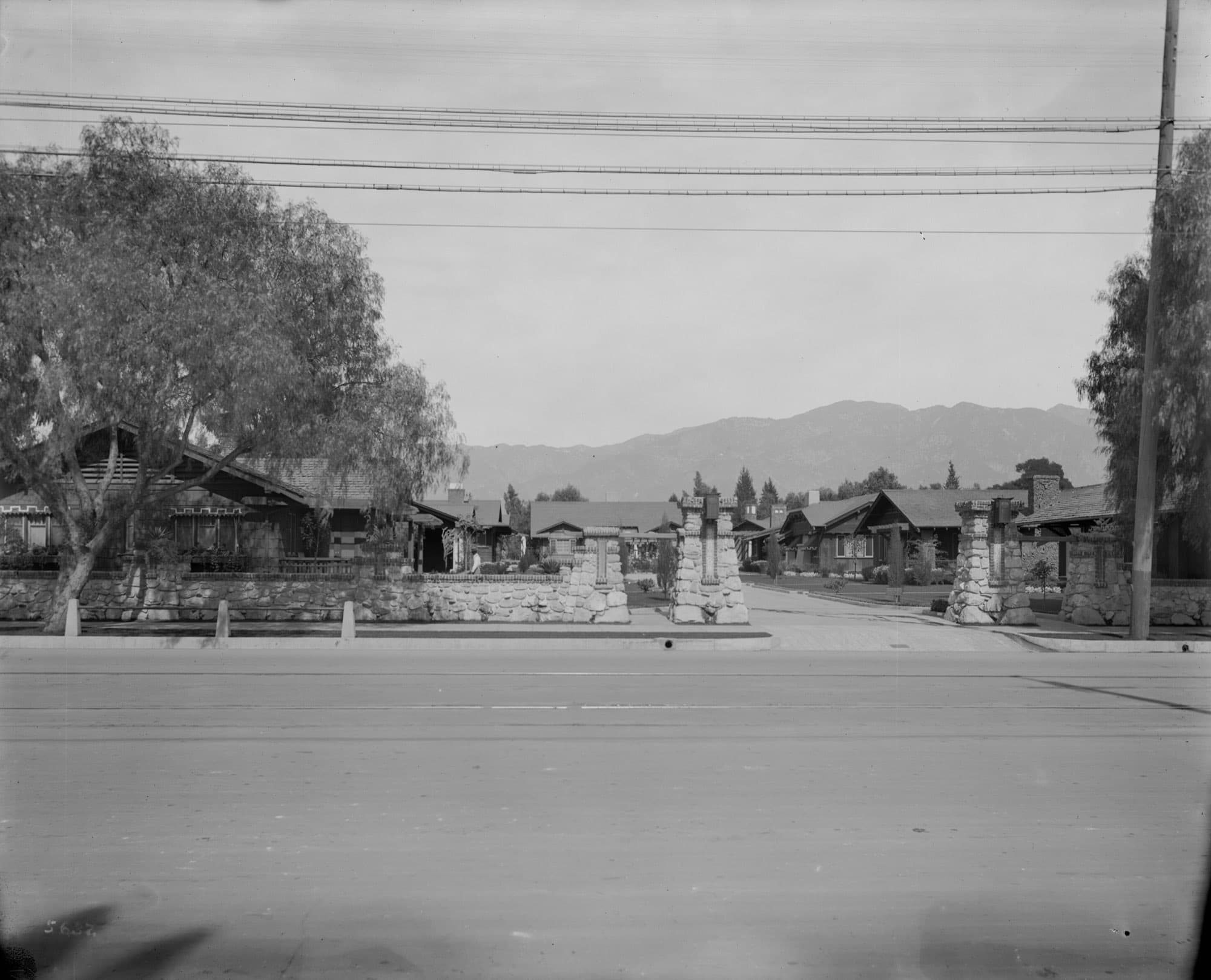
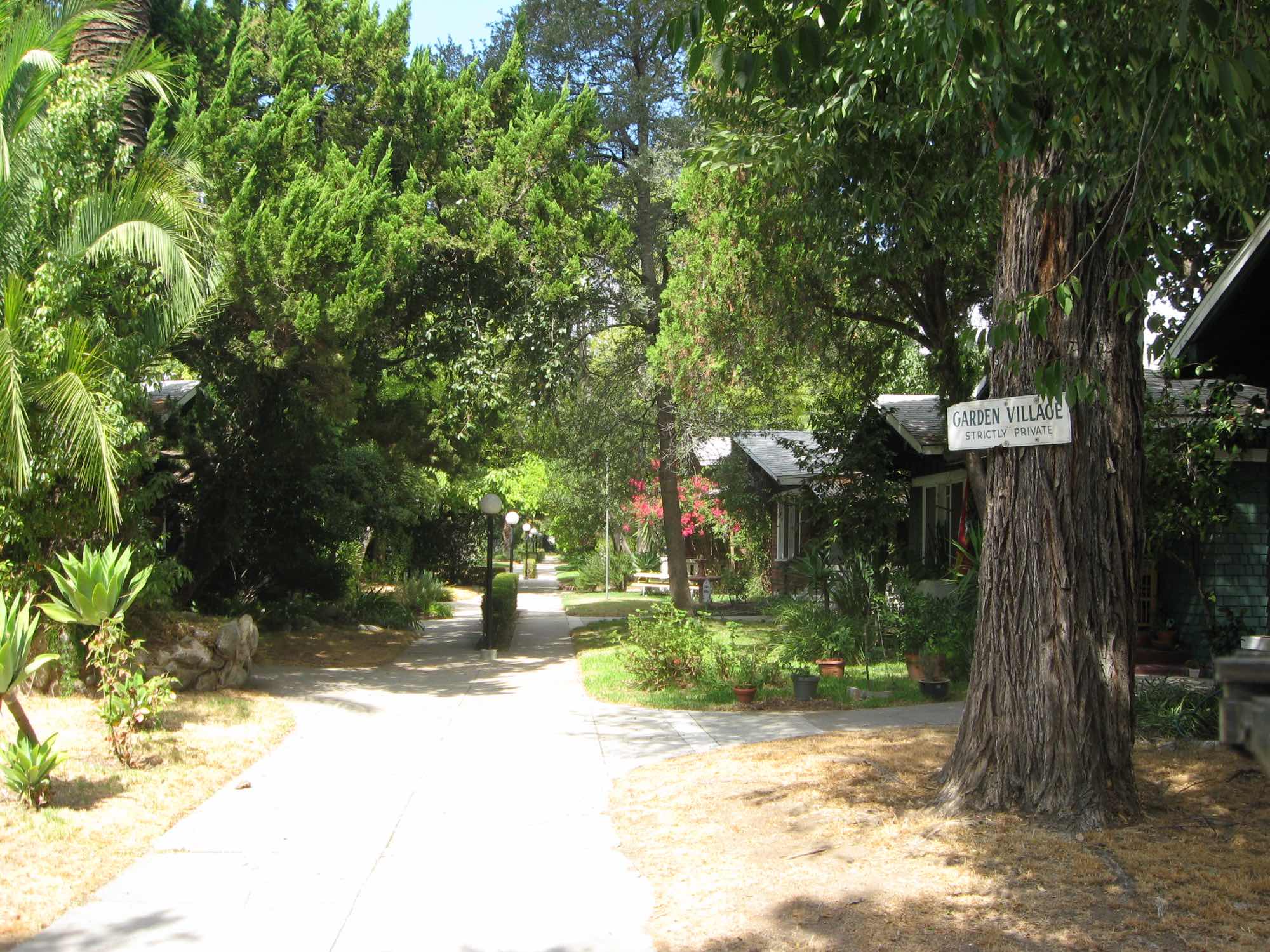
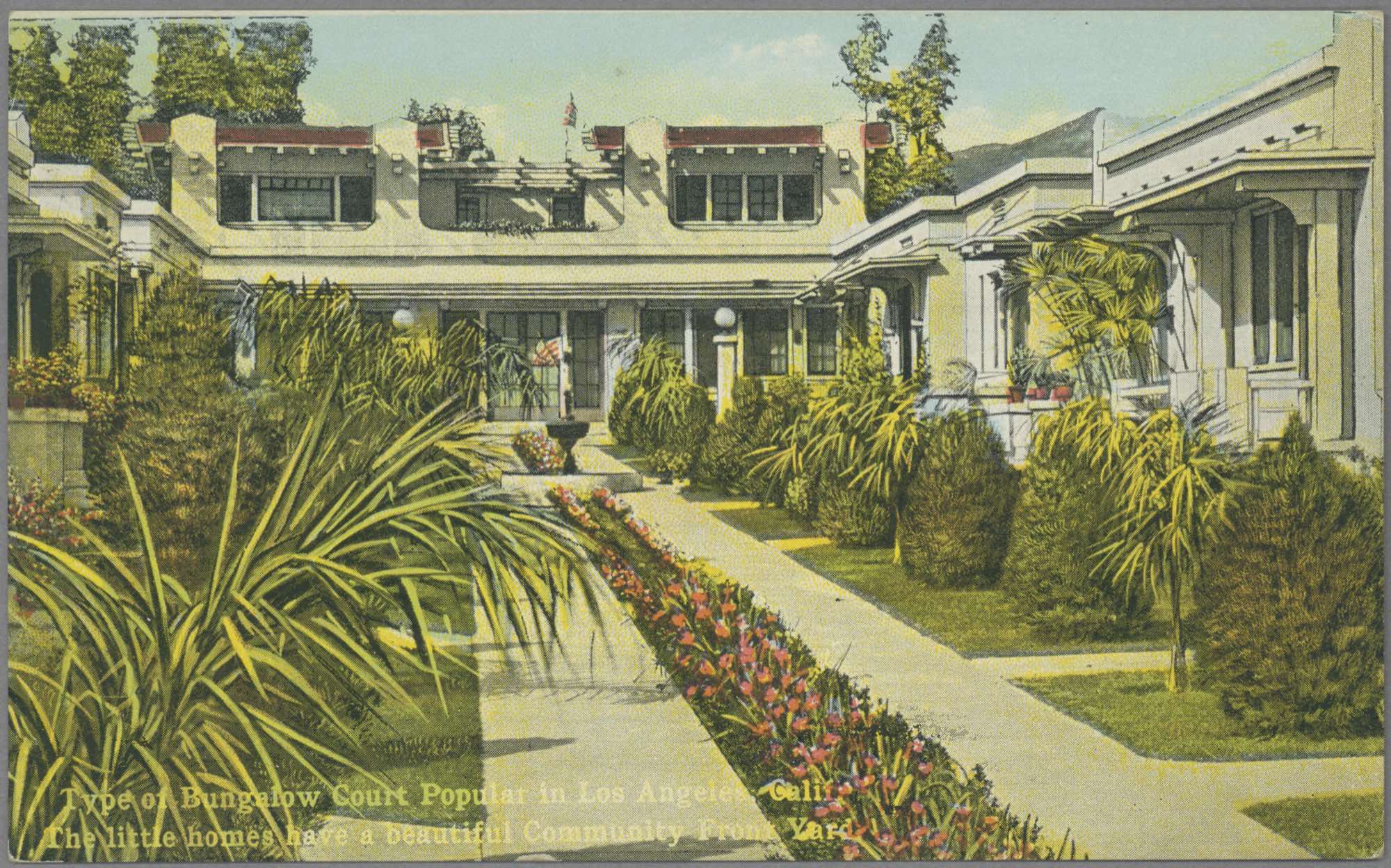
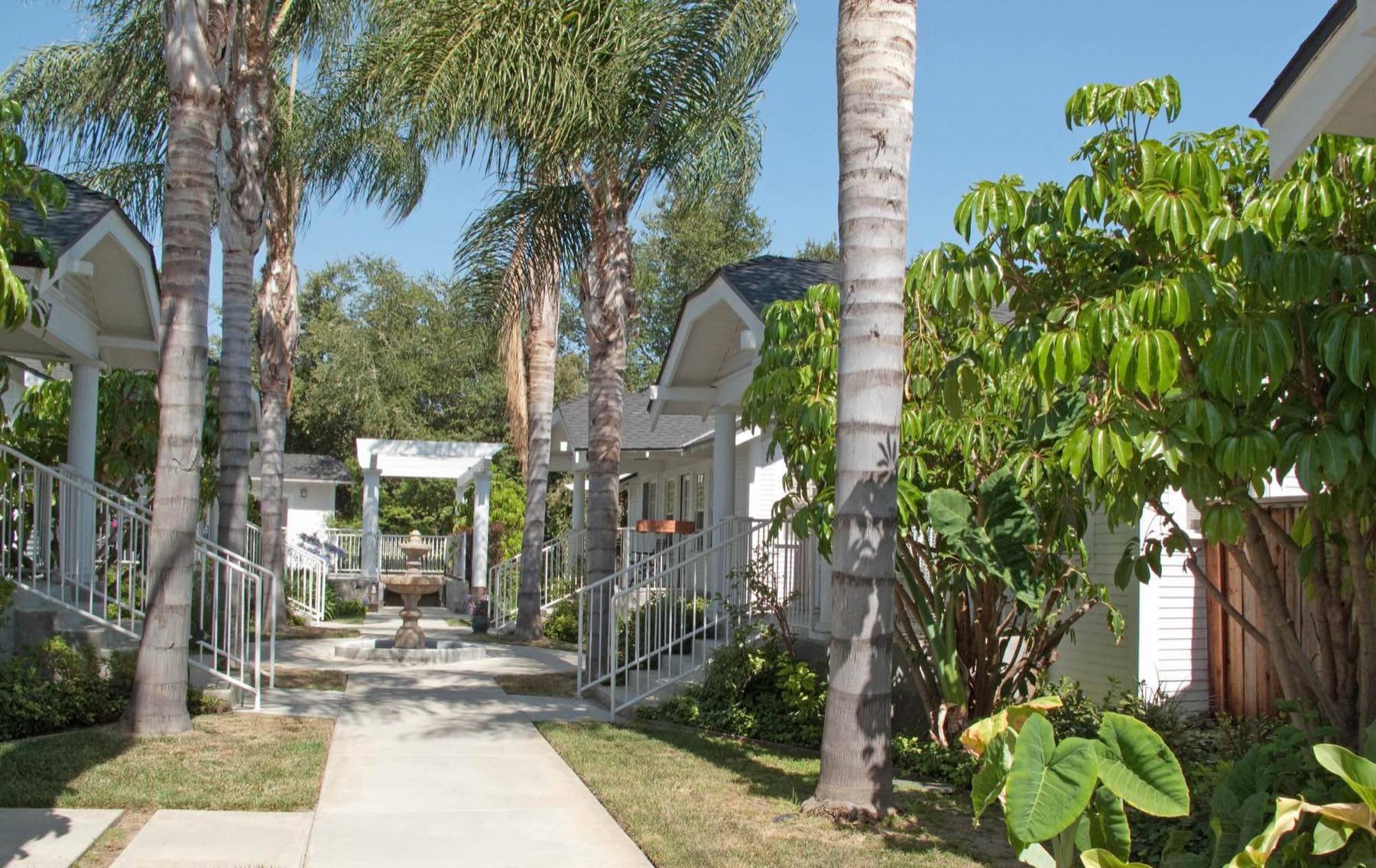
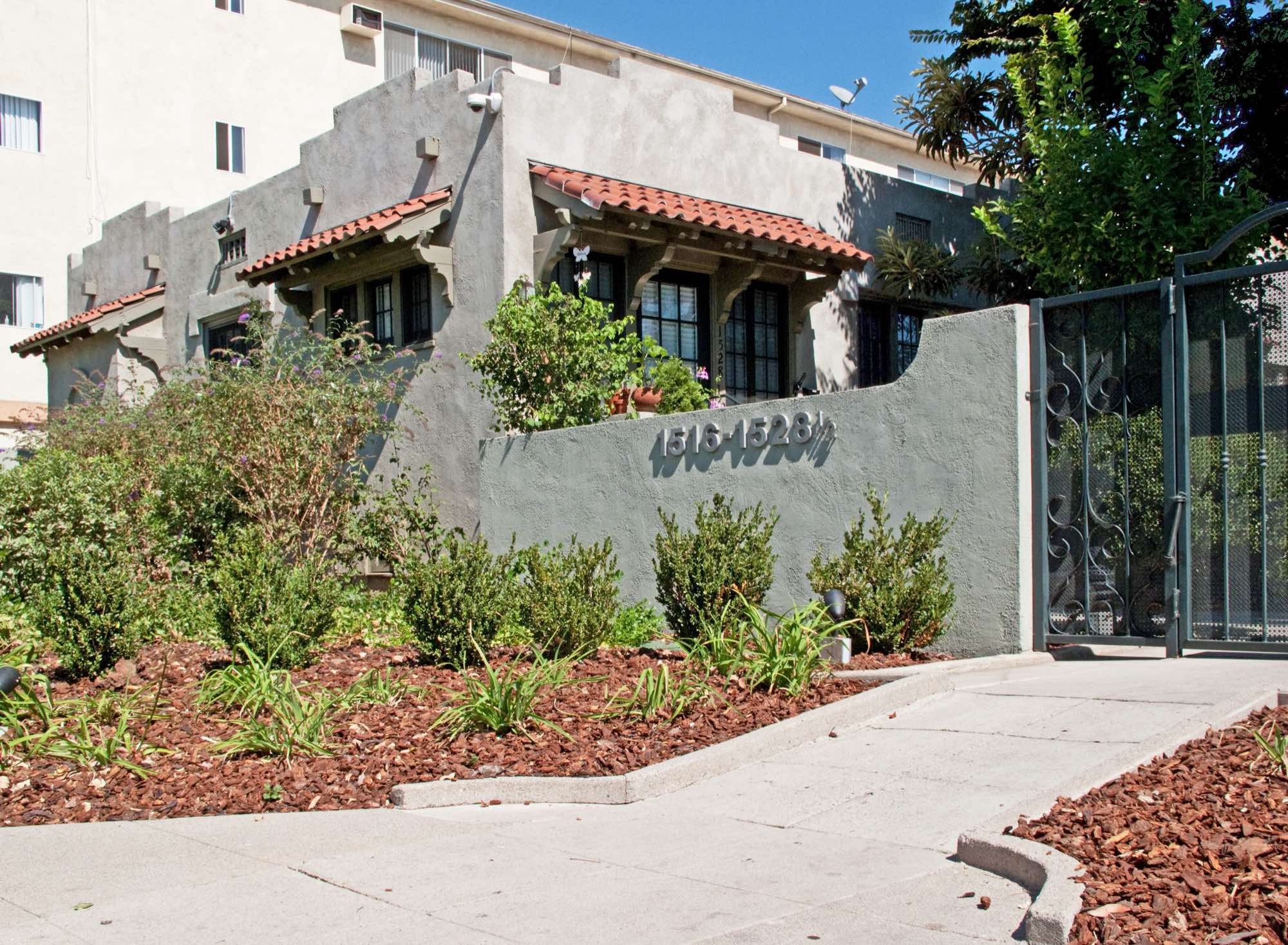
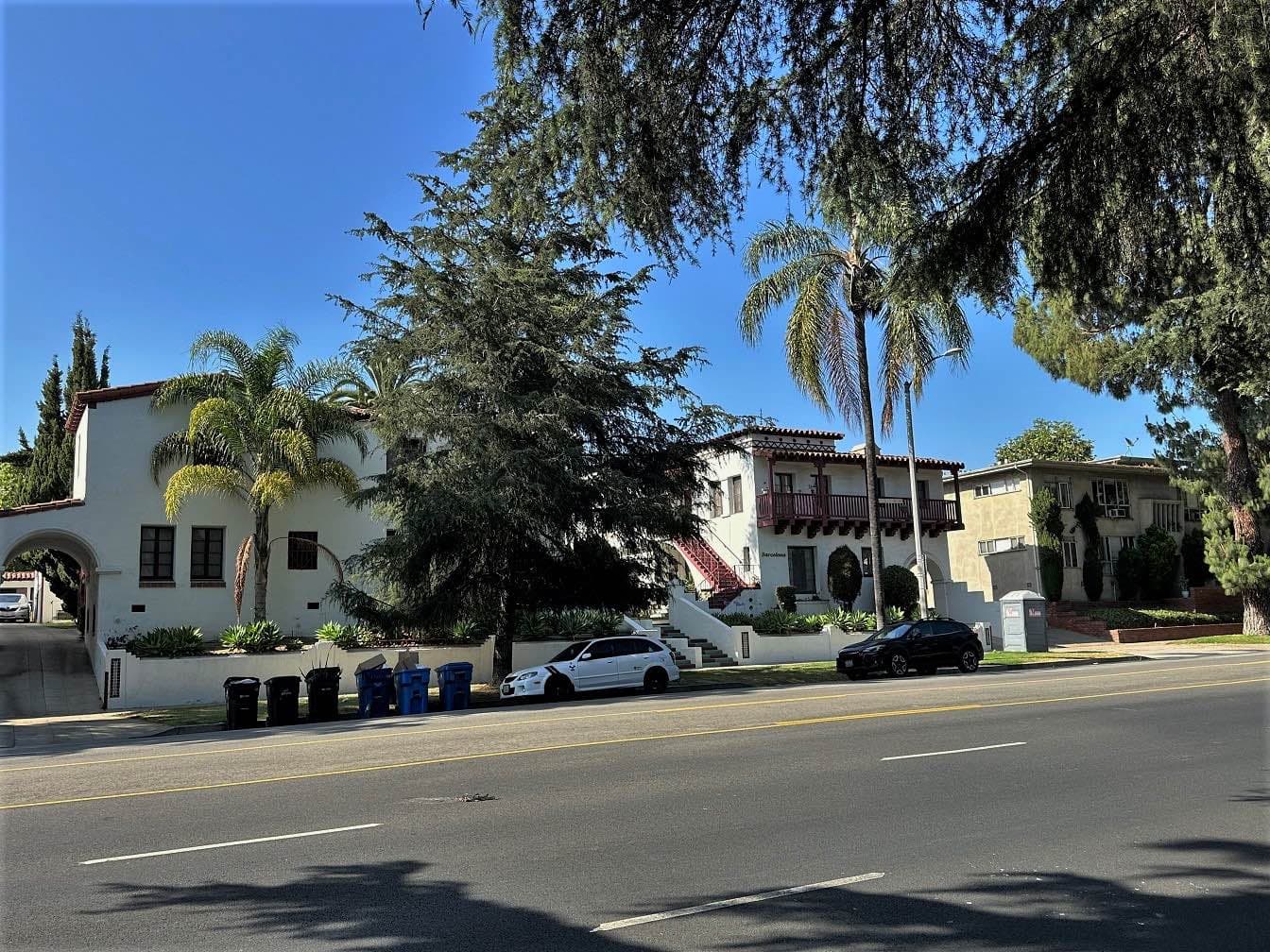
The formula was simple and generous. Small one-storey houses or duplexes face a shared, planted walk, so the garden becomes a common front yard. Bonnie Court in Pasadena (1922–24), in the photograph at the top of this page, lines six identical bungalows along a single garden path. Not everyone approved. In a passage by the historian Robert Winter quoted by the City of Pasadena, Charles Sumner Greene, of Greene & Greene, dismisses the bungalow court: "This is a good example of what not to do." Yet bungalow courts were the predominant form of multi-family housing in Southern California from the 1910s through the 1930s. Two-storey courtyard apartments, a denser relative, still line many of the city's streets.
How California is bringing it back
The first crack was the accessory dwelling unit. State ADU laws have kept widening since 2016. In 2024 the City of Los Angeles permitted 6,626 ADUs against only 7,038 new apartment units, according to Crosstown. The backyard unit has become one of the city's main sources of new homes. It is also the smallest unit of the missing middle. The Journal's author designed one, a 720 sq ft unit, in the Retrofuturism ADU project.
SB 9, the HOME Act, was signed on 16 September 2021 and took effect on 1 January 2022. It requires cities to approve, without discretionary review, up to two homes on a single-family lot and a split of the lot in two. A city's rules can't block two homes of at least 800 sq ft each. In practice the first year was slow in Los Angeles. The Terner Center found that in 2022 the city received applications for 211 units and approved 38, and approved none of 28 lot splits.
SB 79, Senator Scott Wiener's Abundant and Affordable Homes Near Transit Act, was signed on 10 October 2025 and took effect on 1 July 2026. It allows taller housing within a short walk of rail and bus rapid transit stops in the state's urban transit counties. It applies to projects of five or more homes. Near the busiest stops, it permits buildings of up to 95 ft within 200 ft of the station, stepping down to 65 ft at half a mile.
What is SB 79 in Los Angeles?
Los Angeles chose to phase SB 79 in rather than apply it everywhere at once. LA City Planning is preparing a local plan, due around 2030. On 23 June 2026 the City Council adopted a Low-Rise Ordinance alongside the phasing ordinance, and both took effect on 30 June 2026. The Low-Rise Ordinance extends missing-middle incentives to every residential zone, single-family included, within half a mile of designated "Opportunity Station Areas". Projects are capped at 10 or 16 homes, must include affordable units, and are not allowed in historic preservation overlay zones. LAist reports that it allows buildings up to four storeys in 57 neighbourhoods near transit. The city's own fact sheet names what it hopes to see: "bungalow courts, row houses, and town homes".
So a 1909 Pasadena invention is now, in effect, the design brief for a 2026 Los Angeles zoning law.
What missing middle housing means for design
Making it legal is only the first step; the open question is whether anyone builds it well. The economics are tight on small lots, and the SB 9 numbers show how much a permit process can slow a good law. The best bungalow courts did more than add homes. They gave a block a shared garden and a reason to stop and talk, and they kept the scale of the street.
From the studio: the Journal's author explored the type in the Missing Middle project, a compact mixed-use building with a café at street level and five homes above. It aims for balance rather than maximum density. For how other cities handle housing and density, see the six buildings on the Stirling Prize 2026 shortlist, which include a 157-home scheme in suburban Coulsdon. Closer to home, the Lucas Museum of Narrative Art shows Los Angeles investing in public space at Exposition Park. More explainers are in the Journal's Urbanism section.
FAQ
What does missing middle housing mean?
Missing middle housing means house-scale buildings with several homes, such as duplexes, fourplexes, cottage or bungalow courts and townhouses. They are "middle" in scale between detached houses and apartment blocks, and "missing" because zoning made them largely illegal to build from the mid-1940s.
What is a bungalow court?
A bungalow court is a group of small one-storey houses or duplexes arranged around a shared, landscaped walk or courtyard. The first, St. Francis Court, was built in Pasadena in 1909, and courts became Southern California's main form of multi-family housing until the 1930s.
Is missing middle housing legal in Los Angeles?
Increasingly, yes. Since 1 January 2022, SB 9 has allowed two homes and a lot split on most single-family lots, and since 30 June 2026 LA's Low-Rise Ordinance has allowed buildings of up to 10 or 16 homes in residential zones near designated transit stations.
Sources
- About Missing Middle HousingOpticos Design
- Bungalow Courts in PasadenaCity of Pasadena
- How will the Citywide Housing Incentive Program impact Single-Family Zones?Los Angeles City Planning
- Governor Newsom Signs Historic Legislation to Boost California’s Housing Supply and Fight the Housing CrisisOffice of the Governor of California
- Duplexes and Lot Splits (SB 9)California Department of Housing and Community Development
- California’s HOME Act Turns One: Data and Insights from the First Year of Senate Bill 9Terner Center for Housing Innovation, UC Berkeley
- Third Time’s a Charm: Governor Newsom Signs Senator Wiener’s Landmark SB 79 Legislation Into LawAllen Matkins — CEQA Developments
- Senate Bill (SB) 79Los Angeles City Planning
- LA City Council delays state housing law by allowing apartments in some neighborhoodsLAist
- ADUs lift Los Angeles’s otherwise dismal housing marketCrosstown
- Bungalow Court Historic Preservation ConcernsCity of Pasadena
- Low-Rise Ordinance Fact SheetLos Angeles City Planning
- Missing middle housingWikipedia
- Bungalow courtWikipedia
- Bonnie CourtWikipedia