Mel's Drive-In Santa Monica, the 1959 Googie coffee shop at 1670 Lincoln Boulevard, could be demolished for an eight-story building of 138 apartments. Its owner, ValueRock Realty, has filed plans for the site. The Santa Monica and Los Angeles conservancies have asked the city to make the building a landmark, and the Landmarks Commission hears that bid on 14 December 2026.
Key takeaways
- The plan: eight stories, 138 studio, one- and two-bedroom apartments, 526 m² (5,667 sq ft) of shops on the ground floor and 123 parking spaces, designed by Ottinger Architects.
- The trade: 14 of the apartments would be affordable, in exchange for density bonus incentives and waivers from the zoning rules.
- The building: a 1959 coffee shop by Armet & Davis, built as the Penguin. The Los Angeles Conservancy calls it the only surviving building in Santa Monica that fully expresses the Coffee Shop Modern style.
- The restaurant stays open for now. The proposal has not been approved, and an employee told Yo! Venice that Mel's lease runs to 2029.
What happened at Mel's Drive-In Santa Monica
On 7 October 2026, Urbanize LA reported that ValueRock Realty, which owns 1670 Lincoln Boulevard, had applied to raze the restaurant and its parking lot. In their place it proposes a modern podium building of eight stories, with a rooftop deck and a central courtyard, designed by Ottinger Architects. The 138 apartments would sit above 5,667 square feet of commercial space and a semi-subterranean garage for 123 cars.
ValueRock is asking for density bonus incentives to build larger than the zoning allows, plus waivers from other rules. In return, 14 apartments would be rented to very low-, low- and moderate-income households.
The preservation side had moved first. According to the Los Angeles Conservancy's timeline, the owners listed the property for sale in 2025. The Santa Monica Conservancy and the Los Angeles Conservancy then nominated the building as a Santa Monica Landmark, and city staff deemed their application complete on 4 September 2026. The demolition proposal followed on 18 September.
An employee told Yo! Venice he only learned of the plan when he walked into work.
The building: a roof built for drivers
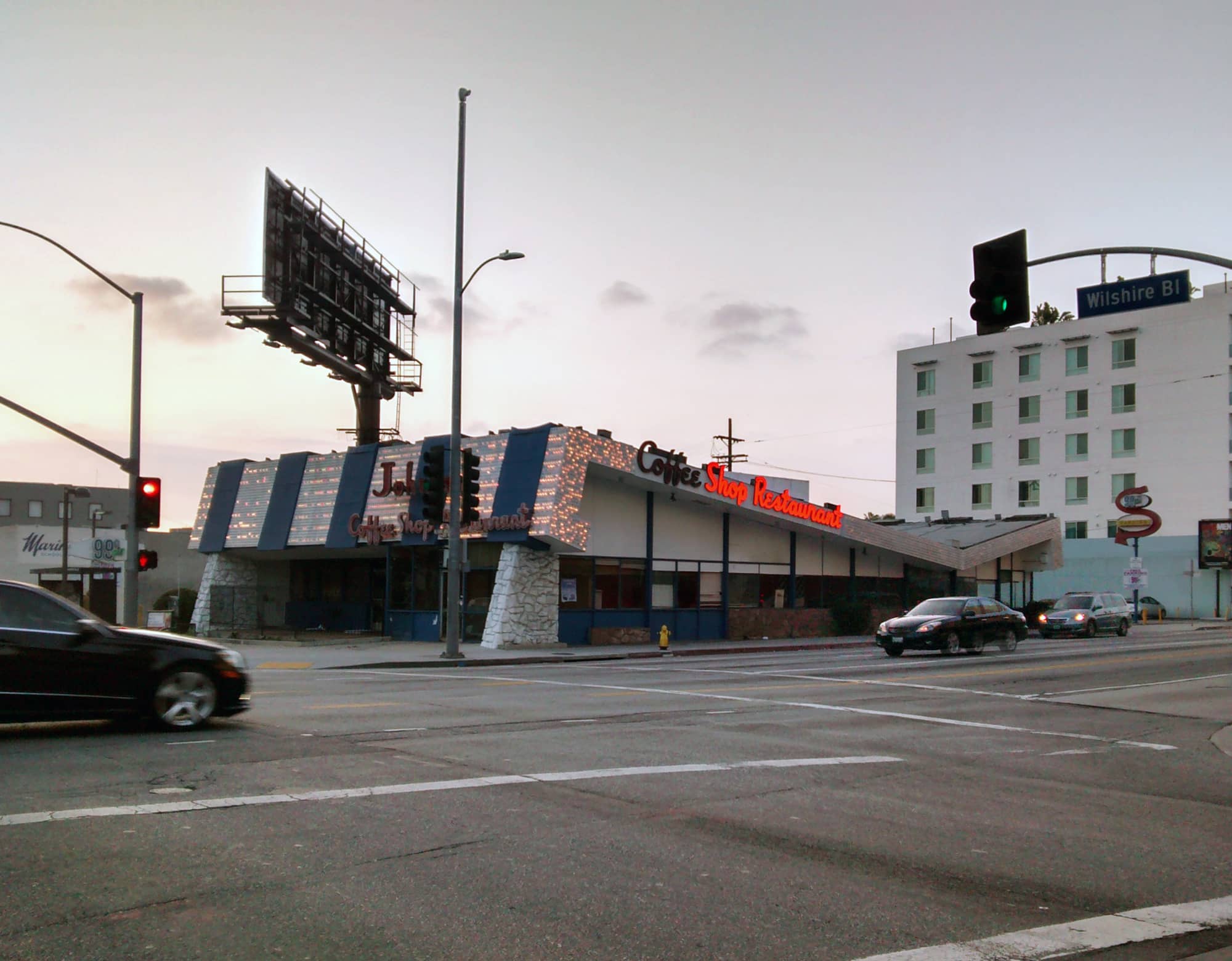
The Penguin opened in 1959 at the corner of Lincoln and Olympic, beside today's westbound 10 Freeway exit. It was designed by Armet & Davis, the influential Los Angeles firm of Louis Armet and Eldon Davis, whose coffee shops set the pattern for Googie architecture in Southern California.
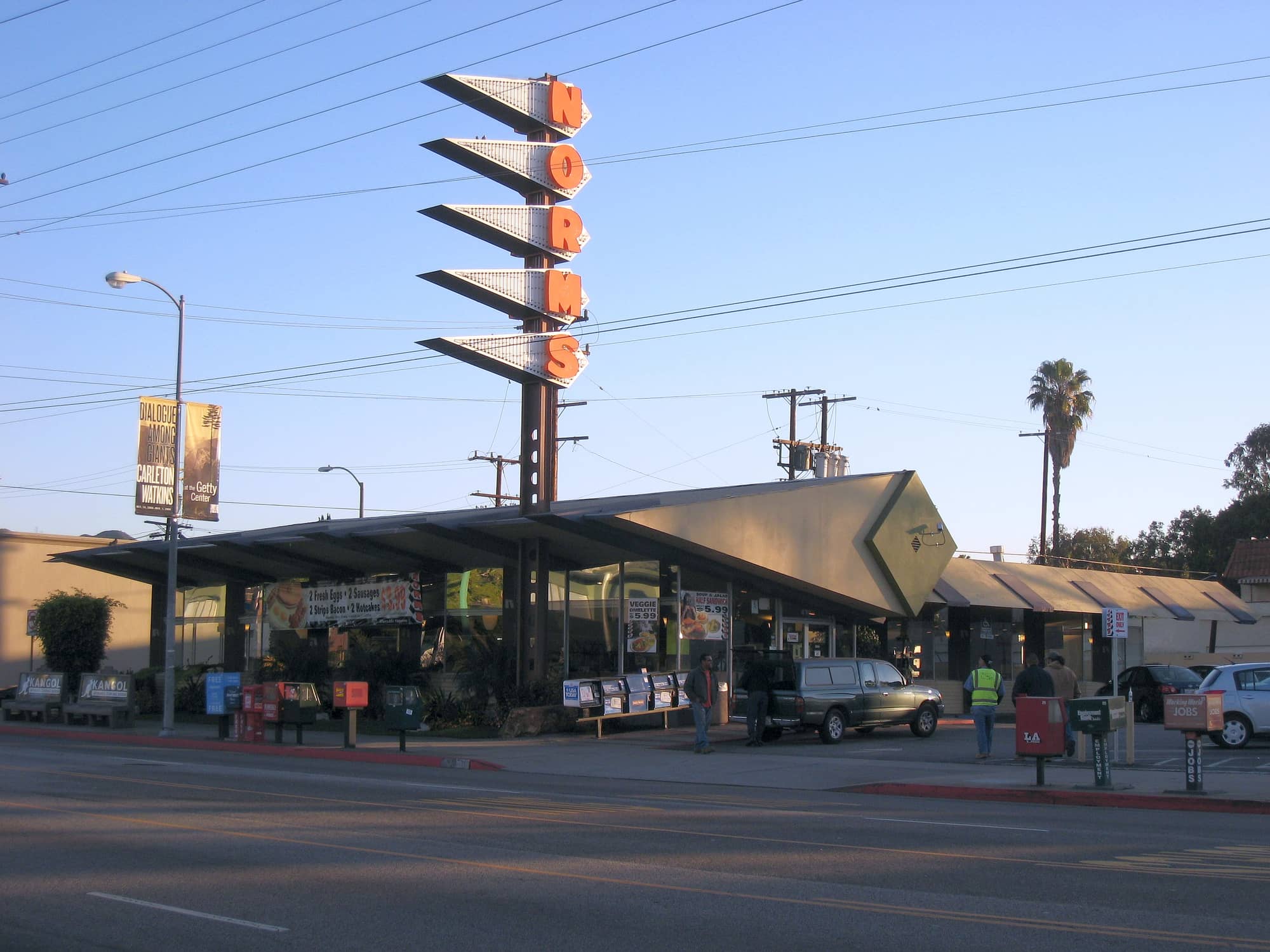
The photograph at the top of this story is not Mel's but Norms La Cienega, a 1957 Armet & Davis coffee shop in Los Angeles; no freely licensed photo of the Penguin was available. The Conservancy's nomination describes the Penguin itself. About 446 m² (4,800 sq ft) in all, it has two connected volumes. At the front, a steep, almost symmetrical gable roof thrusts its peak forward "like the prow of a ship", with a deep overhang and corners that drop close to the ground. Rough-cut stone piers at each corner seem to hold the roof up; in fact they are facings on flat walls that carry on inside around the booths. Glass walls on the east and north sides put the dining room on show to the street. Behind sit a flat-roofed service block and a 1962 addition. The parking lot wraps the west and north sides.
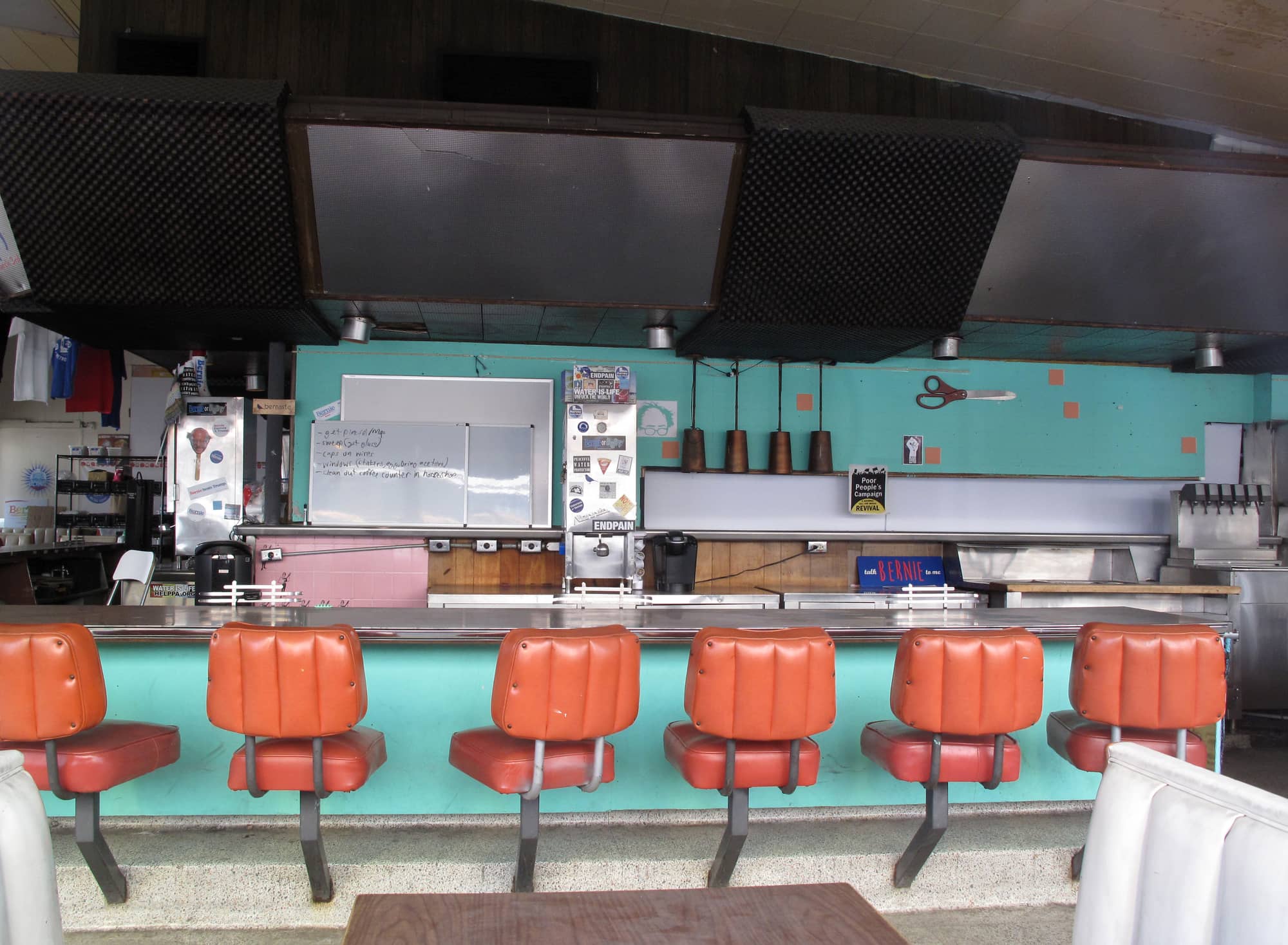
The Penguin became a Western Dental office in 1991, and stayed a dental office for about 25 years. Mel's, the diner chain founded in San Francisco in 1947 by Mel Weiss and Harold Dobbs, opened here in 2018. The interior is a reconstruction, made with preservation consultants: the counter stools and the floating lights are faithful copies, and the neon sign was partly altered for the new tenant. A penguin still stands on top of the sign.
Why it matters: Googie architecture in Los Angeles and the housing line
Googie coffee shops were designed to catch the eye of passing motorists, with over-scaled roofs, plate glass and illuminated interiors. That gives them a weakness in a city that now wants housing on its boulevards: they are small, they sit in big parking lots, and the lots are exactly what developers need. Eldon Davis was modest about it: "We would have liked to have made them more aesthetic, but we were just designing them to sell hamburgers," he said, as quoted by the Los Angeles Conservancy.
Inside the City of Los Angeles, the Conservancy helped protect Armet & Davis's Norms La Cienega and Johnie's Coffee Shop. Santa Monica lost its own Norms, at Lincoln and Broadway, to new development. The Penguin is the last one there.
Urbanize counts more than half a dozen similar housing blocks along Lincoln in the past decade, including 1650 Lincoln, just north of Mel's. Santa Monica needs those homes. The Journal's explainer on missing middle housing in Los Angeles sets out how state law is pushing new homes into the region.
But the choice may not be either–or. Landmark status would not stop building on the site, Nina Fresco of the Santa Monica Conservancy told Yo! Venice; new work would have to build around its historic elements. The Conservancy points to Santa Monica schemes that did exactly that, folding the Rapp Saloon, Nikkei Hall and a Quonset hut into dense mid-rise housing. "When you preserve buildings, what you're doing is you are creating a visual archive of places that tell stories," Fresco said.
From the studio
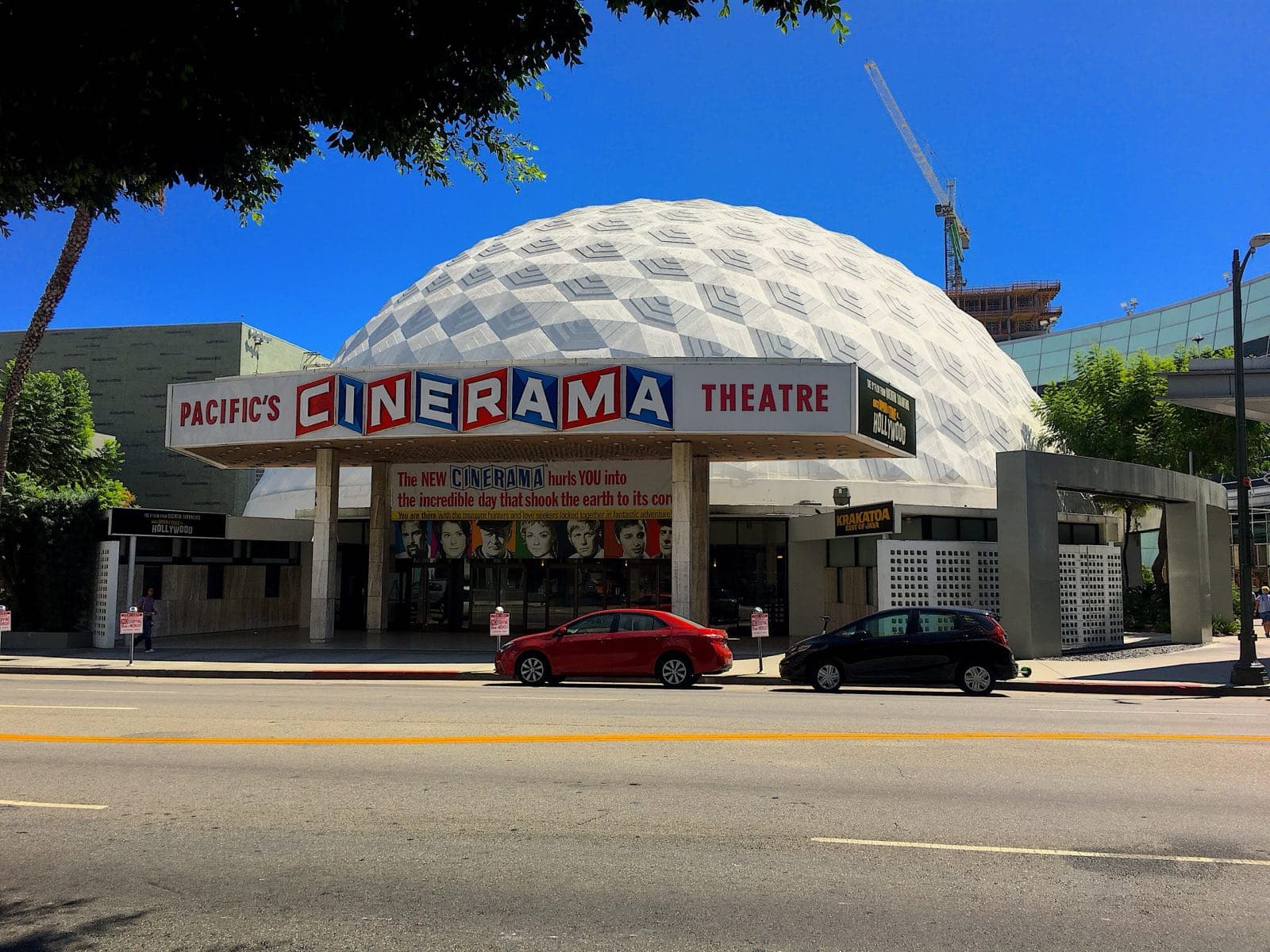
The obvious hybrid is in the site plan. The coffee shop is the corner and the glass; the housing wants the parking lot. Keep the pavilion and its sign on Lincoln, and build on the asphalt. It is harder to design than a clean podium and would cost some units, but it is the same idea as the ground-floor restaurant in this portfolio's Missing Middle project: homes above, a public room at the street. Like the Cinerama Dome reopening in Hollywood, it would keep a landmark by changing what happens around it.
What's next
- Now: ValueRock's application is under city review, and Mel's is open.
- Monday 14 December 2026: the Santa Monica Landmarks Commission holds a public hearing on the nomination of the Penguin / Mel's Drive-In.
- 2029: Mel's lease ends, according to an employee who spoke to Yo! Venice.
More stories from the region are under the Journal's Los Angeles tag and in its News section.
FAQ
Is Mel's Drive-In still open?
Mel's Drive-In Santa Monica is still open. The demolition plan has been filed, not approved, and the restaurant's lease reportedly runs to 2029.
Where is Mel's Diner in Santa Monica?
Mel's Drive-In Santa Monica is at 1670 Lincoln Boulevard, at the corner of Olympic Boulevard, by the westbound 10 Freeway exit. The building opened in 1959 as the Penguin coffee shop.
What is Googie architecture?
Googie architecture is the 1950s and 1960s Southern California style of coffee shops and roadside buildings designed to catch drivers' eyes: sharply angled exteriors, over-scaled roofs, plate-glass walls and brightly lit interiors. Armet & Davis, who designed the Penguin and Norms La Cienega, were among its leading architects.
Sources
- Mixed-use project slated to replace Mel's Drive-In in Santa MonicaUrbanize LA
- A Historic Santa Monica Diner Faces Demolition. Local Advocates are Racing to Save It With a Landmark BidYo! Venice
- The Penguin / Mel's Drive-InLos Angeles Conservancy
- Norms La CienegaLos Angeles Conservancy
- Mel's Drive-In HistoryMel's Drive-In