The Griffith Park merry-go-round, a 1926 carousel by the Spillman Engineering Co. that the City of Los Angeles bought for $1 million in 2025, is now the subject of a restoration expected to take at least two years and cost more than $3 million to $4 million, the Los Angeles Times reported on 12 October 2026. Closed since 2022, it turned 100 this year, and volunteers from the theme-park industry are helping the city plan the work.
Key takeaways
- The news. The Recreation and Parks department's Tracy James, who leads the project, estimates the restoration will top $3 million to $4 million; an assessment is due within weeks.
- The object. A four-row carousel built in 1926 in San Diego and moved to Griffith Park in 1937, with 66 of its original 68 wooden horses still in place.
- The ownership. The Recreation and Parks Commission approved the $1 million purchase on 21 August 2025, after a probate dispute left the ride without a clear owner.
- The work. Lead paint has to be stripped, cracked wood joints repaired, the mechanism overhauled and the ride made accessible under the Americans with Disabilities Act.
- The money. Fundraising will run through the nonprofit Friends of Griffith Park, with Saturday open houses in the meantime.
What happened
In a feature published on 12 October 2026, the Los Angeles Times set out the first detailed plan for bringing the carousel back. Tracy James of the city's Department of Recreation and Parks, who focuses on Griffith Park, is leading the effort. She expects the restoration to take at least two years and to cost upwards of $3 million to $4 million, well above the extra $2 million the city was reported to be seeking when it bought the ride in August 2025. A formal assessment is expected in the coming weeks, and the money will be raised through the Friends of Griffith Park.
"This is the jewel in the middle of the city," James told the paper. Her team includes volunteers who work in ride engineering, led by Kurt Sawitskas of Walt Disney Imagineering, together with his colleagues Troy Leverton and Pim Renting. They are giving their own time and stress that they are not there on behalf of the Walt Disney Co.
The purchase itself was the first step. Recreation and Parks commissioners approved it at their 21 August 2025 meeting, and the department's assistant general manager, Matthew Rudnick, told them that the sellers had received higher offers but wanted the merry-go-round to stay in the park. The carousel had been in limbo since its operator, Julio Gosdinski, died suddenly near the height of the COVID-19 pandemic; his share went into probate, and the ride, briefly reopened in 2021, closed again in 2022 in need of repairs.
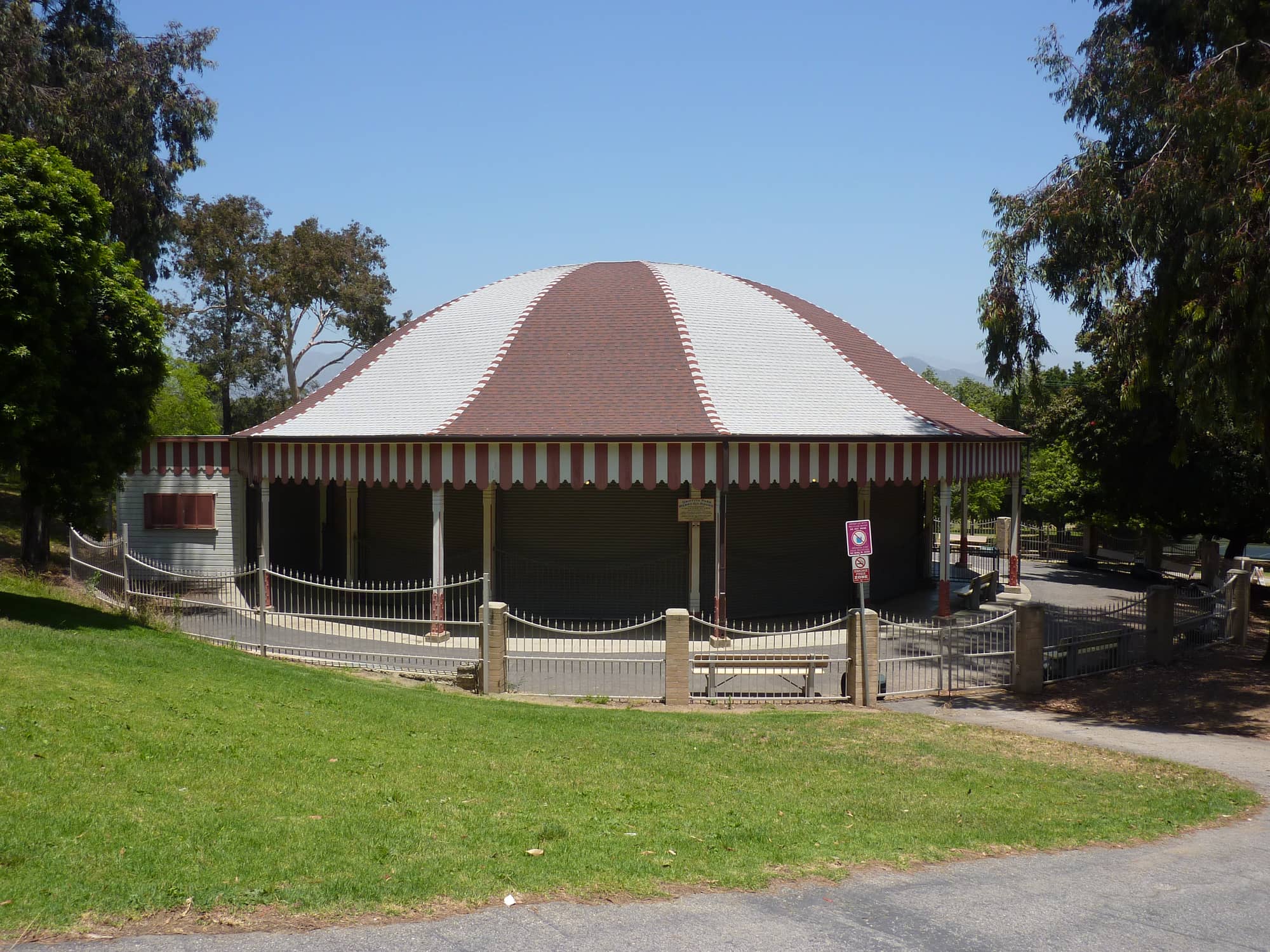
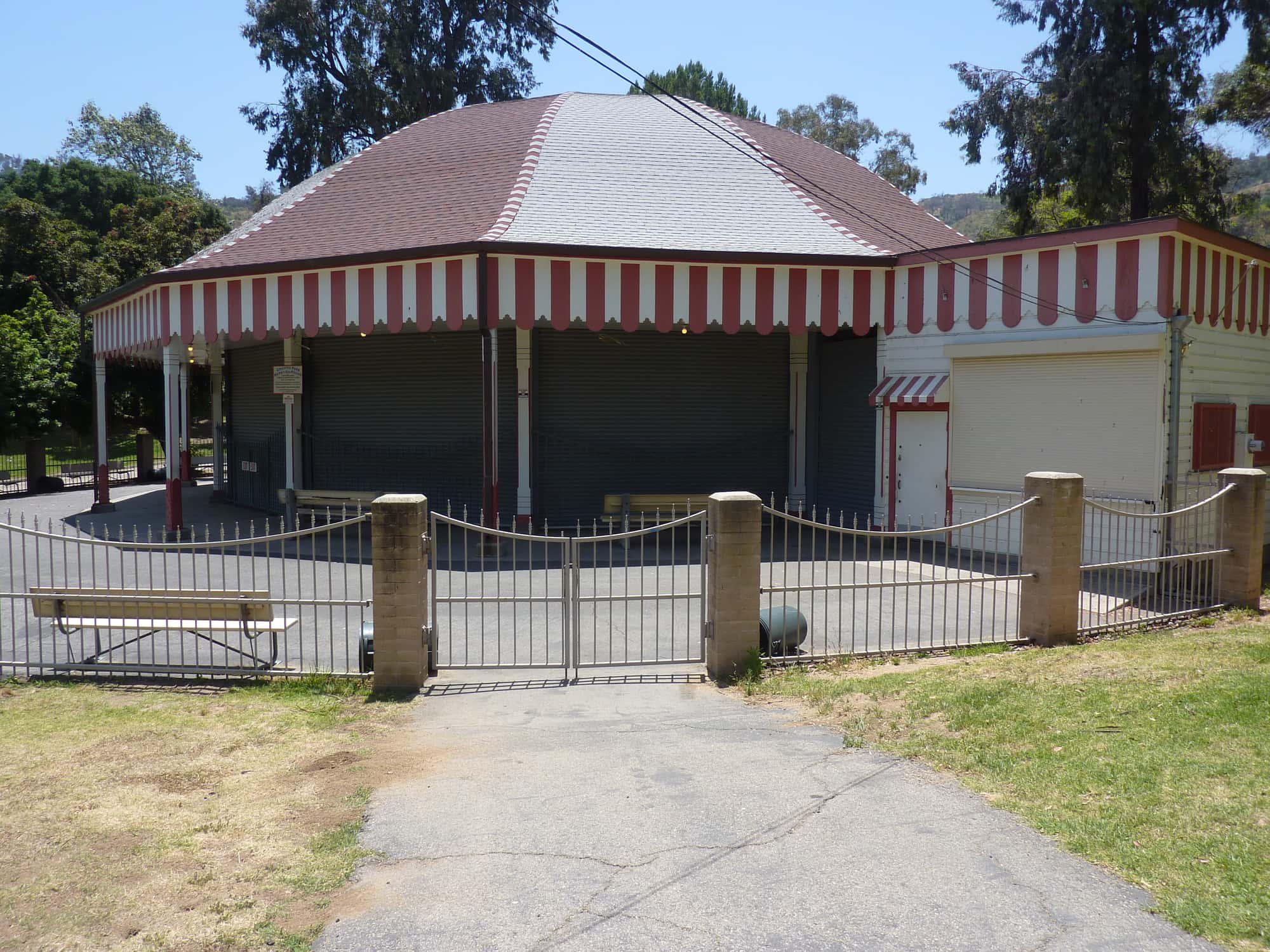
The Griffith Park merry-go-round and its pavilion
The carousel was built in 1926 and began its life in San Diego before it was moved to Los Angeles in 1937, in the depths of the Depression. It is the showcase product of Spillman Engineering, whose horses are known for their wind-blown manes and the heavy carving on the "romance" side, the flank that faces the crowd. Some carry lion heads at the chest, others cherubs; all wear jewels and tails of real horsehair. The ride also includes horses by the master carvers Charles Looff and Charles Carmel. It runs at a single speed of 14 mph (about 23 km/h).
It is also rare as a type. City-commissioned appraisals describe it as one of a dwindling number of four-across merry-go-rounds of its kind, retaining nearly all its original features, the Times reported in 2025. Of the original 68 horses, one is at Disneyland and one is with a former owner, according to James.
The architecture is modest and exact. A round pavilion with a domed roof in alternating segments and a scalloped valance shelters the machine, and on most days it sits behind roller shutters near the park's ranger station and tennis courts. It is a building that exists to frame movement: the shutters roll up, and the ride becomes the facade.
What the restoration involves
The work is closer to conservation than to repair. The horses were painted with lead paint in the 1920s, which must be removed, and many have small fractures in their wood joints that can only be fixed on bare timber. "There's no way to just keep painting over this and hiding the problem," Sawitskas told the Times. The team is matching each horse to its original colours using carousel history books, and plans to restore worn wood and recut the carving lines. Mechanically, the ride needs new controls for a smoother start and stop, and changes to meet the Americans with Disabilities Act. When the city bought it, the Times reported, it could not even be moved by hand.
Why it matters
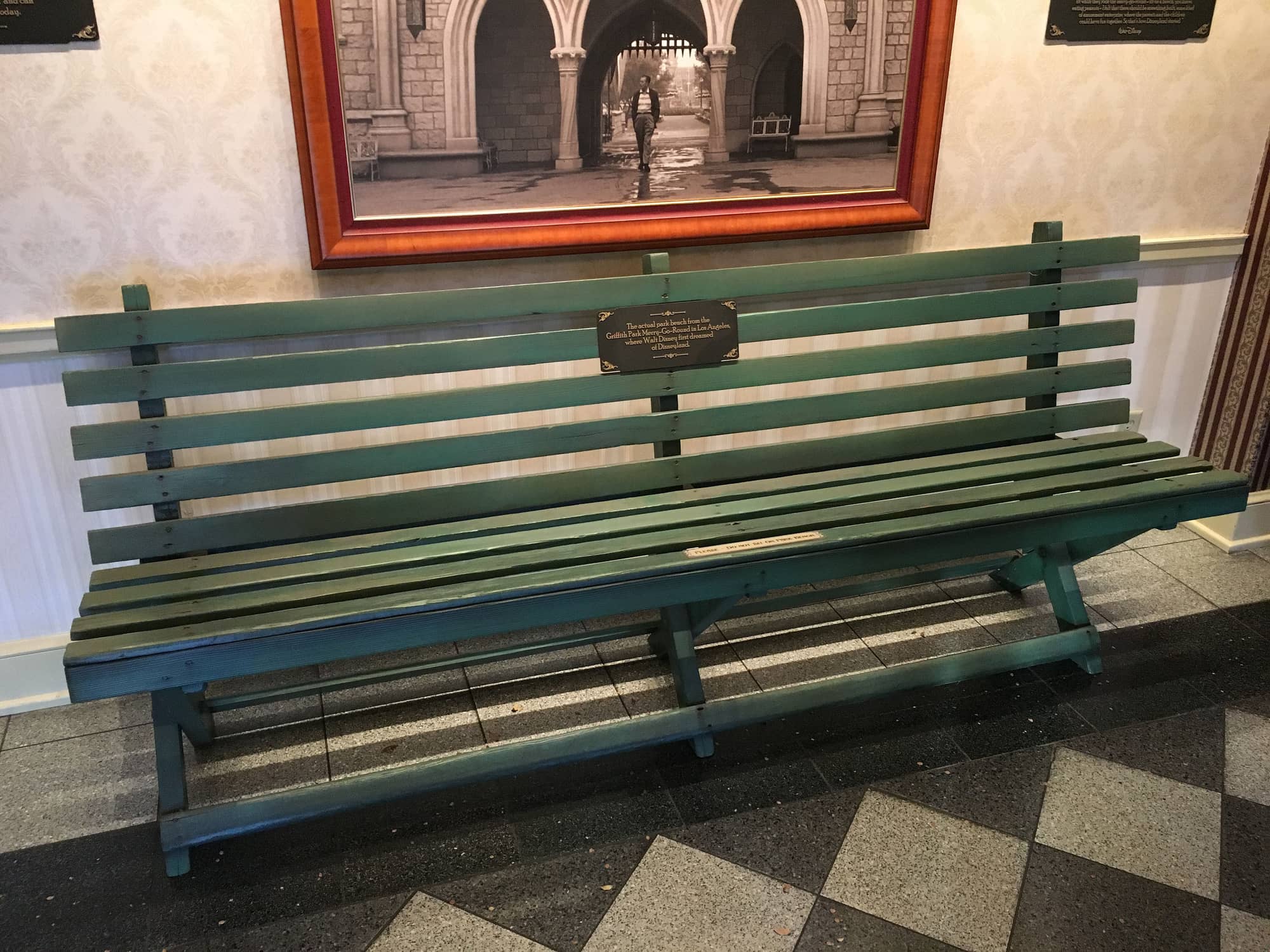
The merry-go-round matters to Los Angeles for more than nostalgia. Walt Disney is said to have sat on a bench here watching his daughters ride and imagined a park where adults and children could be entertained together; that bench, and one of the horses, are now at Disneyland. The carousel has also been a civic stage. In 1961 a riot broke out when police alleged that a 17-year-old Black rider had not paid, and it took 75 officers to end it; in the late 1960s it hosted love-ins, and in 1995 a vigil for Jerry Garcia, the Times recounts.
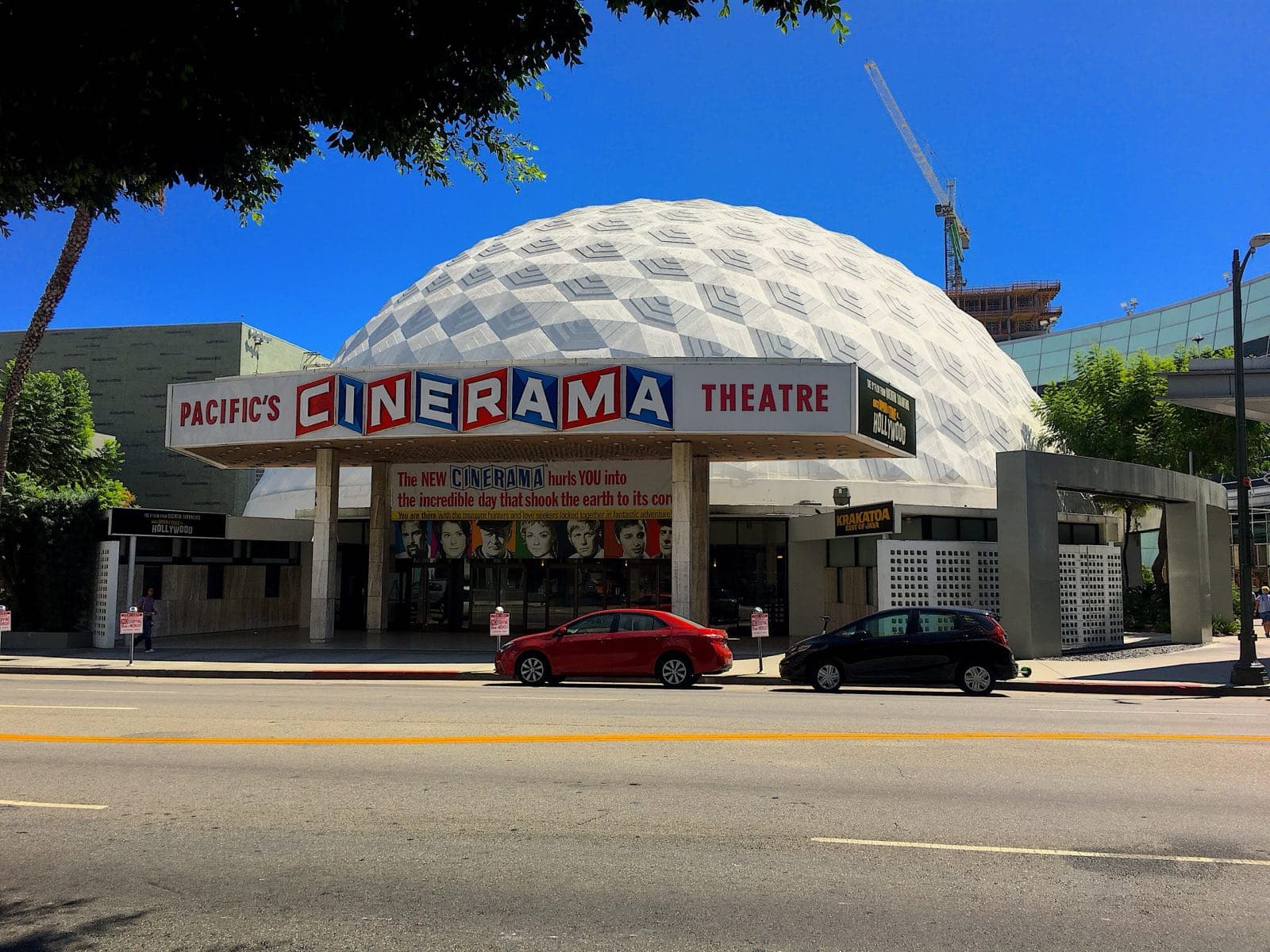
For preservation, it is a useful case. Like the Cinerama Dome and the Googie coffee shops fought over in Santa Monica, its value lies in an experience as much as in a structure, and the hard part is keeping that experience running, not just keeping the object standing. Public ownership solves the first problem. The second needs money, skill and a plan that treats a ride as a working historic machine. More Los Angeles stories are in the Journal's news section.
What's next
The cost assessment is due in the coming weeks. James plans to host open houses on as many Saturdays as she can, with updates posted on the project's social media, and fundraising will run through Friends of Griffith Park. In 2025 the Times reported that a broader restoration of that part of the park was slated for completion before the 2028 Olympic Games; on James's estimate of at least two years, that target now leaves little room for delay.
FAQ
Why is the Griffith Park carousel closed?
The Griffith Park carousel closed in 2022 because it needed repairs and its ownership was tied up in probate after its operator, Julio Gosdinski, died during the COVID-19 pandemic. The city bought it for $1 million in 2025.
When will the Griffith Park carousel reopen?
The Griffith Park carousel has no reopening date. The Recreation and Parks department expects the restoration to take at least two years and to cost more than $3 million to $4 million.
What is the Griffith Park carousel's connection to Disney?
The Griffith Park carousel is where Walt Disney is said to have watched his daughters ride and imagined Disneyland. A bench and one of its original horses are now on display at Disneyland.
Sources
- What it will take for the Griffith Park merry-go-round to finally spin againLos Angeles Times
- City buys Griffith Park carousel, where Disney dreamed up a theme park. It could reopen soonLos Angeles Times
- Update: City's parks department considers buying Griffith Park carouselThe Eastsider
- The L.A. carousel that inspired Disneyland is about to get restoredTime Out Los Angeles