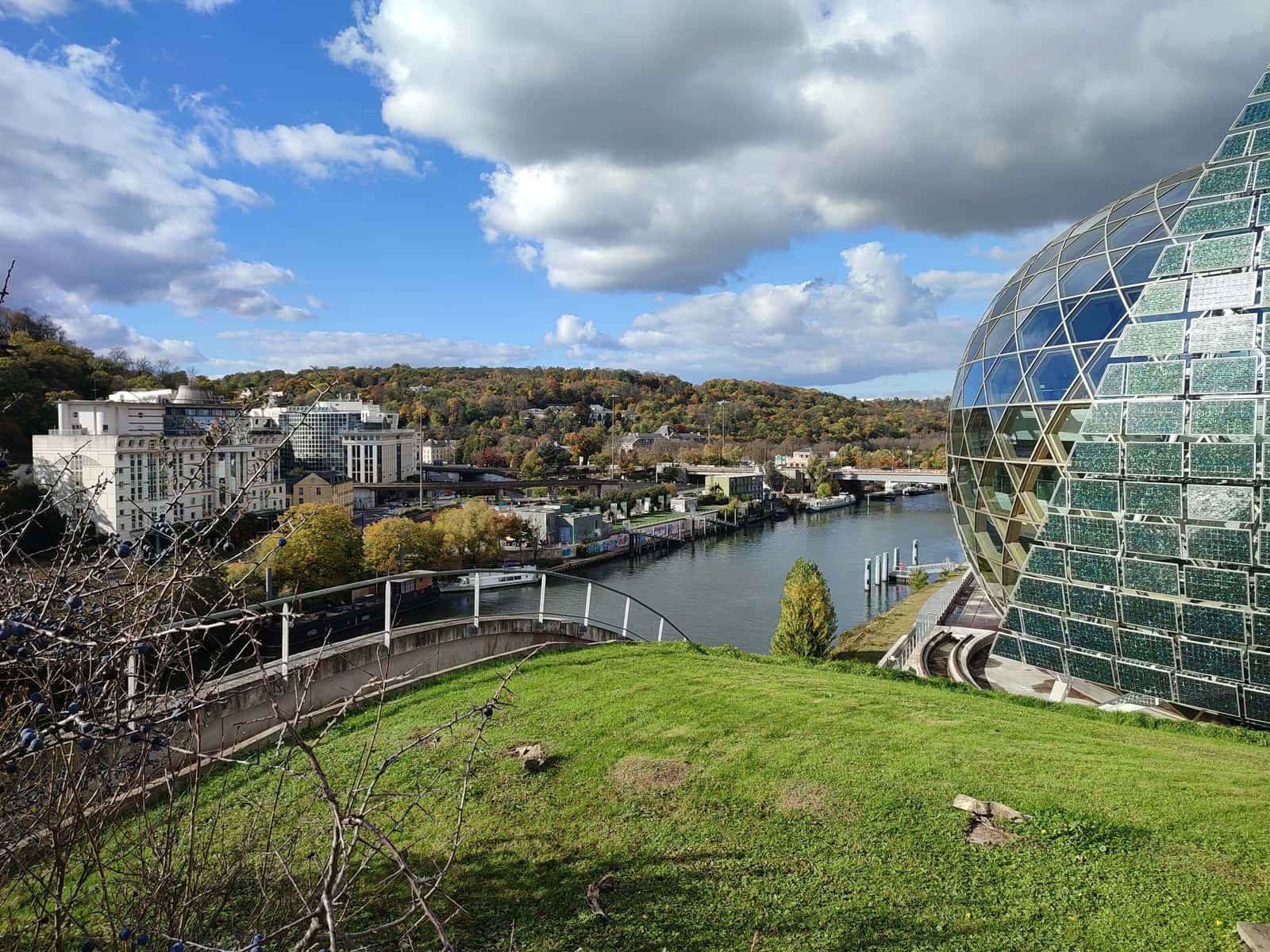
Large Île Seguin, a contemporary art centre by the Catalan practice RCR Arquitectes, winners of the 2017 Pritzker Prize, opens to the public on 17 October 2026 on the island in the Seine at Boulogne-Billancourt where Renault built its first factory. Developed by the property group Emerige, it gives the long-empty island a second cultural anchor, at the opposite tip from Shigeru Ban's La Seine Musicale.
Key takeaways
- The opening. The first exhibition, Moteur Imaginaire, curated by Cecilia Alemani, opens on 17 October 2026 and runs to 7 March 2027.
- The building. Emerige gives 5,000 m² in all, including 2,500 m² of exhibition space and a 1,000 m² main hall; Wallpaper reports a fourth-floor gallery up to 14 m high with no columns.
- The skin. The museum is clad in copper-pink anodised aluminium scales, some of them microperforated, beside a corten steel cinema front.
- The site. It is part of Emerige's 53,000 m² Pointe des Arts, with an eight-screen Pathé cinema, a 230-room hotel and 20,000 m² of offices.
- The access. Entry is free for visitors aged 26 and under, and 40% of the building is open to all, according to Wallpaper.
What happened: Large Île Seguin opens this week
Wallpaper* published the first detailed look inside the building on 13 October, and Numéro toured it with the director, Paula Aisemberg, on 14 October, three days before the public opening. It is RCR's first project in greater Paris, designed with the French practice CALQ; RCR's associate architect on the job was Gilles Trégouet.
The opening show fits the site. Moteur Imaginaire takes the automobile as its subject: the mechanics, the factory floor, the unions and the car as an object of desire. Wallpaper counts 120 works from the 1930s to today, nearly half of them from Renault's collection, among them Dubuffet, Vasarely, Tinguely, Niki de Saint Phalle and Robert Doisneau. Large commissioned 17 new works for it, and Emerige organises the show in five chapters, in partnership with the Fonds Renault pour l'Art et la Culture.
The building: aluminium scales and a long view
The Île Seguin covers about 11 hectares (28 acres) of river just west of Paris. For much of the 20th century it was a single industrial complex, Renault's first factory, which closed in 1992; its buildings had been demolished by 2005, according to Wallpaper. The island then waited through a series of abandoned projects, including François Pinault's planned museum by Tadao Ando, which went to Venice instead, and a Jean Nouvel "micro-city" that was dropped.
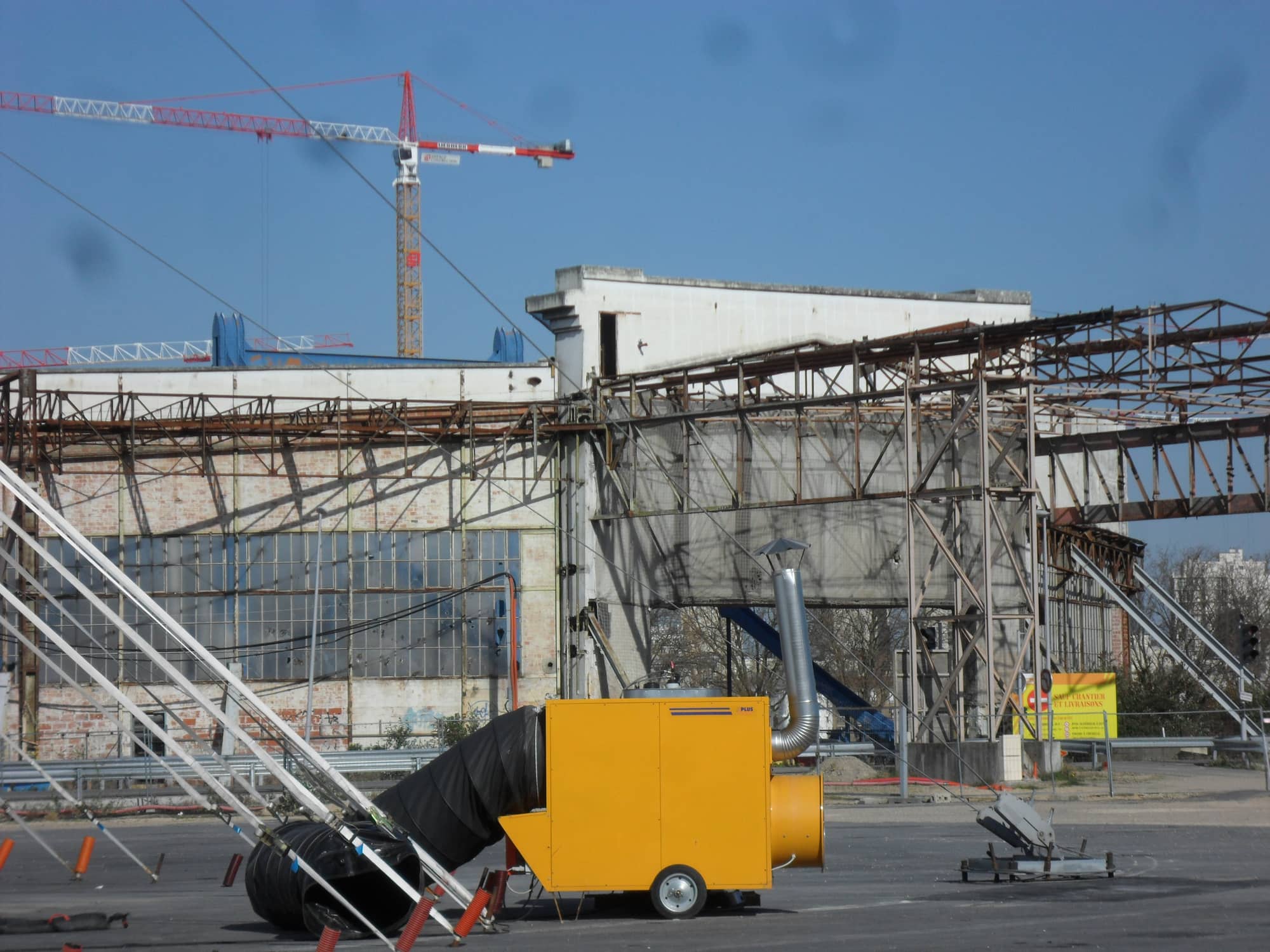
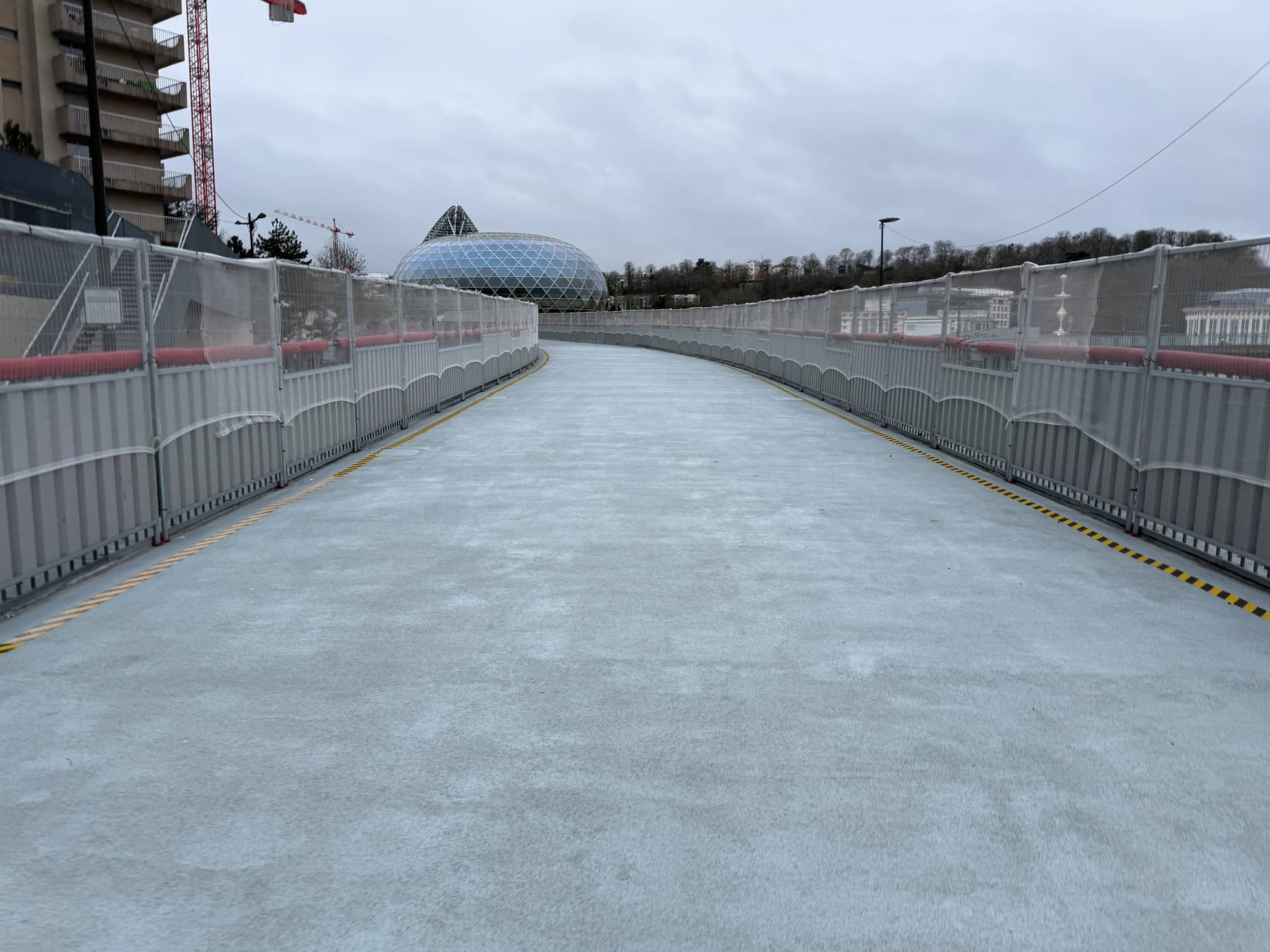
Large sits at the upstream tip, which Emerige's project page describes as looking over the Seine valley to the east, Boulogne-Billancourt to the north and the Meudon hills to the south. The wider Pointe des Arts team includes Baumschlager Eberle and CALQ, with Michel Desvigne as landscape architect for the island. RCR also designed a new footbridge to the museum.
The materials carry the argument. The cinema's front is rust-coloured corten steel, and the museum wears scales of copper-pink anodised aluminium, some perforated so finely that from inside they filter the light like a screen. "Corten steel develops a patina," Carme Pigem, RCR's co-founder, told Wallpaper, setting it against the polished aluminium that reflects the river. Inside, the atrium is floored in dark galvanised steel planks, and a single long escalator rises to the fourth floor, Numéro reports, where the 1,000 m² hall opens without a pillar under a ceiling up to 14 m high. The gallery walls are modular and reusable. Trégouet told Wallpaper that visitors are surprised by how the interior "multiplies the viewpoints out onto the landscape". There is a café by Constance Guisset and a planted panoramic terrace that can also show art.
Why it matters: a Pritzker practice and a private art centre
Large applies the material language Pigem describes, weathering steel against reflective metal with the light filtered rather than admitted, to a dense commercial block: a museum woven into a development with a multiplex, a hotel and offices. The question is whether the scales and the long views survive the mix. On paper the plan helps. The hall's 14 m height and column-free span give curators real room, and the reusable walls mean each season does not end in a skip.
It is also a test of a model. Emerige describes Large as a hybrid, and Le Journal des Arts reported in June an annual budget of about €5 million, to be met mainly from the centre's own income: concessions, tickets and private hire. That is the logic of the Pointe des Arts as a whole, where culture is the anchor that lets offices and a hotel be built. The same paper was sharper on the opening show, noting that Renault's collection had long been neglected and dispersed and finding in the exhibition "une certaine amnésie" about that history.
For the Journal's readers the comparison is with other museum projects this autumn: the Basel extension at the Fondation Beyeler, also by a Pritzker laureate, and the reopened Design Museum Gent. Large differs from both in being built by a developer, as part of a development.
What's next
- 17 October 2026: Large opens to the public with Moteur Imaginaire.
- 7 March 2027: the inaugural exhibition closes. Emerige plans two seasons of temporary exhibitions a year, according to Wallpaper.
More museum openings are in the Journal's News section.
Sources
- An art centre, Large, is the newest addition to Île Seguin, and its formerly industrial siteWallpaper*
- Large, un nouveau modèle hybride de centre d'art contemporain pour le Grand ParisGroupe Emerige
- Arts and culture centre, Île Seguin, Boulogne-BillancourtGroupe Emerige
- Le Large, espace pharaonique dédié à l'art, ouvre sur l'île SeguinNuméro
- Emerige ouvre un nouveau centre d'artLe Journal des Arts