The Zaha Hadid Foundation will open 10 Bowling Green Lane in Clerkenwell, the Grade II-listed Victorian school that housed Zaha Hadid's studio for more than 30 years, as a public venue for architecture and design on 3 November 2026. The London practice Studio KA has refurbished the ground floor into galleries, a lecture hall and a learning space. The first exhibition, "Zaha Hadid: Architecture of Performance", surveys her designs for the stage.
Key takeaways
- The dates. A press and private view on 29 October 2026, a two-day symposium on 30–31 October, and the public opening on 3 November, all made public on 8 October.
- The building. A Grade II-listed schoolhouse built in the early 1870s, home to Hadid's practice for more than three decades.
- The interior. Studio KA opened up the ground floor, reopened a fireplace and old doorways, and kept Hadid's own details, from Z-shaped door pulls to shard-like floor insets.
- The programme. A collection exhibition on Hadid's set designs, a video work by the artist LionHeart and a timeline of her life by the illustrator Mona Chalabi.
- The timing. The opening falls in the tenth year after Hadid's death on 31 March 2016; 31 October would have been her 76th birthday.
What happened: the Zaha Hadid Foundation opens its doors
The foundation announced the programme on 8 October 2026, Dezeen reported. The building had already been signalled: in announcing its anniversary year, the Zaha Hadid Foundation said that its home at 10 Bowling Green Lane, "formerly Zaha Hadid's office", would reopen in the autumn as a public cultural space with exhibitions, talks, workshops and residencies. What is new is the date, the design team and the first season.
The opening comes in three steps, according to e-architect, which published the foundation's release. Press and invited guests see the building on 29 October. On 30 and 31 October, "89° of Zaha Hadid", a symposium organised with the Architectural Association and Serpentine, runs across all three institutions. Hadid studied at the AA from 1972 to 1977 and was a Serpentine trustee from 1996 until her death; she designed the first Serpentine Pavilion in 2000. The public opening follows on 3 November.
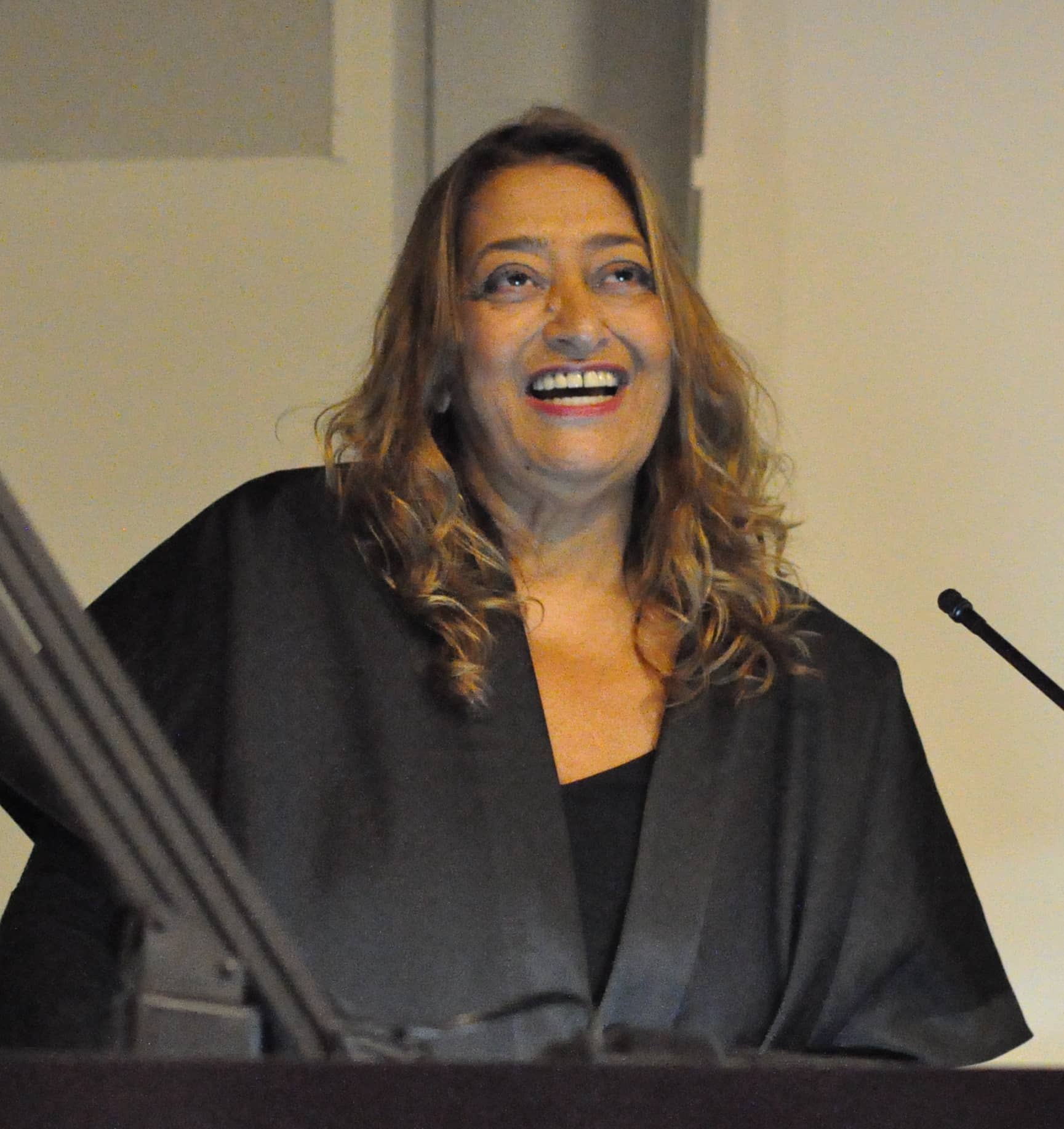
Aric Chen, who has led the foundation since the summer of 2025, framed the move as a change of role for the building.
We're thrilled to see this next evolution for the Foundation at 10 Bowling Green Lane, from what was Zaha's home base to a new home for architecture and design in London.
The building: a Victorian school, then a studio, now a venue
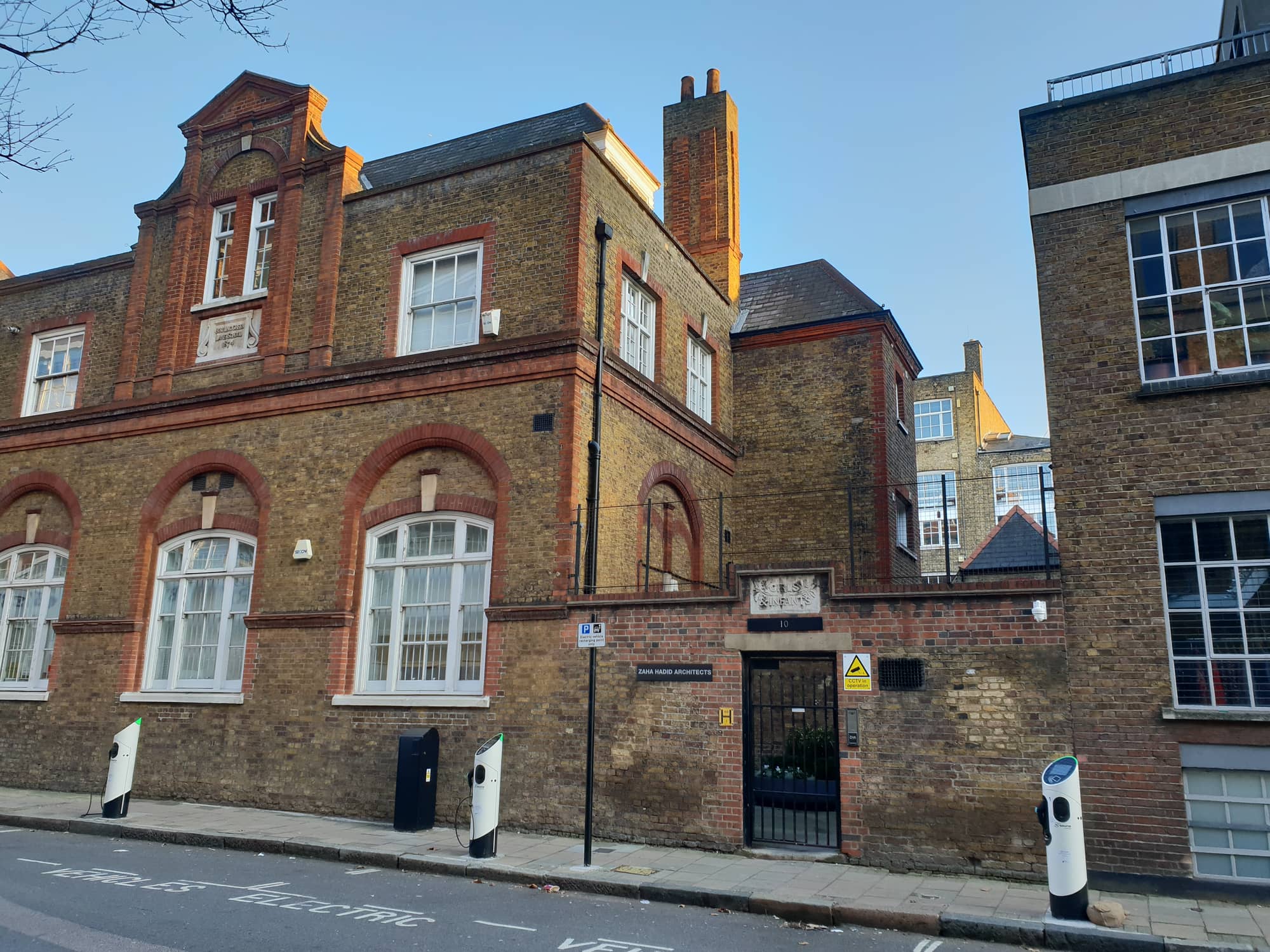
Bowling Green Lane is a quiet Clerkenwell street, and the building gives little away from it. It is a two-storey school in yellow stock brick, banded and arched in red, with tall round-headed windows on the ground floor and a gated doorway in the boundary wall. For three decades a modest nameplate by the door announced one of the most radical practices of the late 20th century. The contrast between the sober Victorian shell and the work drawn inside it was always part of the story.
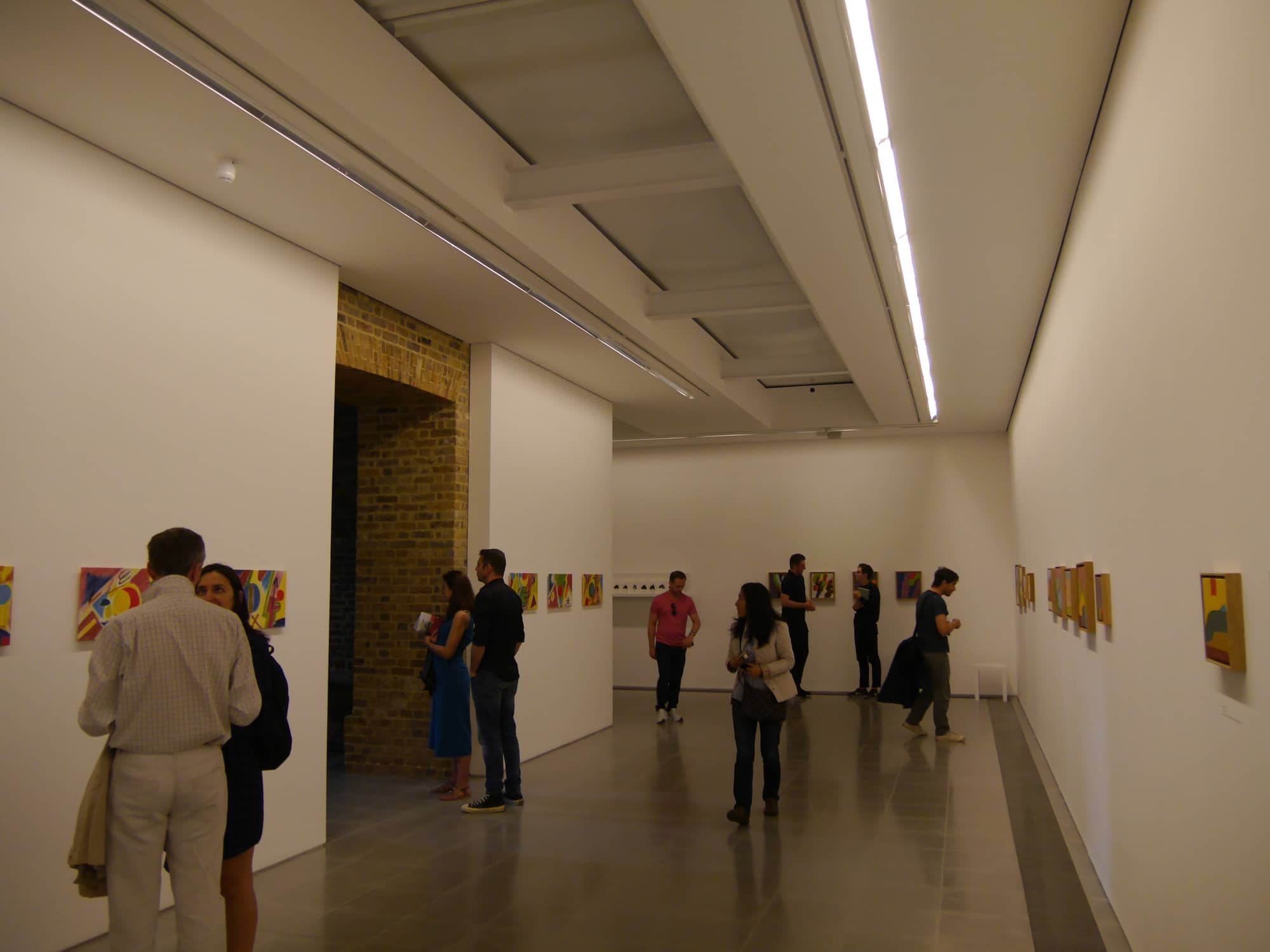
The refurbishment is careful rather than spectacular, which is the right call for a listed interior. Studio KA, led by Katherine Nolan and Alex Butterworth, reorganised the ground floor to open up the plan and improve circulation, designboom reports. Original features, including a fireplace and doorways, have been reopened. The traces of Hadid's own occupation stay: Z-shaped door pulls and shard-like insets in the floor. New floors and finishes take their colours from Hadid's paintings, so the palette of her canvases now runs through the rooms where her office worked.
The choice of architect fits the brief. Studio KA works mainly on the reuse of existing and listed buildings, and its principals teach and research material reuse and demolition at Cambridge and London Metropolitan University. The fit-out was supported by Vitra, Viabizzuno, izé, Roca and Forbo, among others, according to the foundation's release.
Inside: galleries, a lecture hall and Hadid on stage
The ground floor now holds two galleries, a lecture hall, a learning space and collection displays. Zaha Hadid Design, with furniture and objects by Hadid and her studio, is based in the building, and the Architectural Association runs a pop-up bookshop.
The first exhibition is a shrewd choice. "Zaha Hadid: Architecture of Performance", curated by Catherine Howe with the guest curator Libby Sellers, is the foundation's first show drawn from its own collection, and it looks at Hadid's work for dance, opera and pop. It runs from d1, a 1989 collaboration with the choreographer Rosemary Butcher, through the Music Video Pavilion in Groningen (1990), the Metapolis ballet in Charleroi (1999) and the Pet Shop Boys' Nightlife tour (1999–2000), to a 2014 staging of Così fan tutte at the Walt Disney Concert Hall in Los Angeles. The stage let Hadid test her geometries at full scale, with real bodies moving through them, so the show should say a good deal about how the paintings became buildings.
Two commissions complete the opening. In the second gallery, the London artist LionHeart shows The Rebar Beneath, an 11-minute, two-screen video built from research in the archive. In the foyer, the Pulitzer Prize-winning illustrator Mona Chalabi projects a timeline of Hadid's life and work onto a textile modelled on an Issey Miyake coat in the collection.
The foundation has also changed its face. The Amsterdam studio Experimental Jetset designed a new identity built on a distorting typographic grid instead of a fixed logo, and a new website by Made by ON launches in the week of 12 October.
Why the Zaha Hadid Foundation London venue matters
Hadid founded the foundation in 2013, three years before her death, with three aims: to support architectural education, to care for and show her archive, and to establish or support a permanent museum or gallery, Wallpaper* reported in September. The collection is large, roughly 300,000 objects by the foundation's own estimate, and most of it sits at its second site in Shad Thames, the former Design Museum building that Hadid bought for about £10 million. That building still needs repairs, and its future will take time to plan. Bowling Green Lane is the part of the museum idea that can open now.
It also settles a question of identity. Hadid's practice was renamed ZHA earlier in 2026 by its principal, Patrik Schumacher, after a legal dispute with the foundation ended, Dezeen notes. The building where she worked now belongs, in public terms, to her legacy rather than to the firm. "It was Zaha's wish for the Foundation to preserve her legacy while carrying her ideas forward," said Rana Hadid, chair of the trustees, in the foundation's release.
As an interior, the project belongs to a strand of reuse that has become a theme of 2026, from the Thompson Center redesign in Chicago to the Bilbao Fine Arts Museum extension, where Foster + Partners lifted a new gallery over an old museum. Here the gesture is smaller, and more domestic. The building was a school, then a studio, and now becomes a place to learn about the studio. It also opens a Pritzker laureate's working rooms to the public within a decade of her death. Hadid, the 2004 Pritzker laureate, was the first woman to win the prize. Another laureate's galleries began opening near Basel in September, the Fondation Beyeler expansion by Peter Zumthor, and the comparison is useful: one is a new building for a collection, the other a collection returned to the rooms that made it.
What's next
- Week of 12 October 2026: the foundation's new website launches, with wider access to its programmes and archive.
- 29 October 2026: press and private view at 10 Bowling Green Lane.
- 30–31 October 2026: "89° of Zaha Hadid", the symposium with the Architectural Association and Serpentine, ending on what would have been Hadid's 76th birthday.
- 3 November 2026: public opening. Chen told Wallpaper* in September that he aims to open to the public five days a week.
More stories about the work of Pritzker laureates are under the Journal's Pritzker laureates tag, and more on interior architecture in the Interiors section.
FAQ
What is the Zaha Hadid Foundation?
The Zaha Hadid Foundation is an independent UK charity that Zaha Hadid set up in 2013. It looks after her collection and archive, runs public programmes and supports architectural education, from bases at 10 Bowling Green Lane and in Shad Thames, London.
Where is the Zaha Hadid Foundation in London?
The Zaha Hadid Foundation's public venue is at 10 Bowling Green Lane, Clerkenwell, London EC1R 0BQ, in the Victorian school that was Hadid's studio for more than 30 years. It opens to the public on 3 November 2026.
What is the first Zaha Hadid Foundation exhibition at Bowling Green Lane?
The first Zaha Hadid Foundation exhibition at Bowling Green Lane is "Zaha Hadid: Architecture of Performance", curated by Catherine Howe and Libby Sellers. It covers Hadid's stage and set designs for dance, opera and music, from 1989 to 2014.
Sources
- Zaha Hadid to be celebrated with 2-day public symposium as part of a year of commemorationsZaha Hadid Foundation
- Zaha Hadid's former London headquarters reopens as a public hub for architecture and artdesignboom
- Zaha Hadid Foundation, London, Englande-architect
- A Londra riapre il luogo in cui Zaha Hadid ha cambiato il modo di immaginare l'architetturaIl Giornale dell'Arte
- Inside the Zaha Hadid Foundation and the iconic architect's remarkable archiveWallpaper*
- Former Zaha Hadid headquarters to open as public arts venue in LondonDezeen
- Studio KA — InformationStudio KA
- Zaha Hadid — 2004 laureateThe Pritzker Architecture Prize