Brutalist architecture is a style of exposed, unpainted concrete or brick, heavy geometric forms and visible structure that emerged in Britain in the 1950s. Its name comes from "new brutalism", a term traced to Sweden and popularised by the critic Reyner Banham, not from the word "brutal". After decades as the most disliked style in architecture, it is trending again, pushed by a hit film, new museums and exhibitions, and preservation fights, including one in Los Angeles that has just saved the Sunkist building.
Key takeaways
- What it is: architecture that shows its materials and structure, usually raw concrete, in massive, repetitive geometric forms.
- Where the name comes from: the Swedish nybrutalism, coined for a house in Uppsala in 1950, taken up by Alison and Peter Smithson and made famous by Banham's 1955 essay. Banham linked it to béton brut, French for "raw concrete".
- Why it's back: US Google searches for "brutalist architecture" peaked in early 2025, during the awards run of the film The Brutalist, and in 2026 remain well above their 2021 level; London is getting a Museum of Brutalist Architecture in 2027.
- The LA angle: the 1970 Sunkist headquarters in Sherman Oaks became a Los Angeles Historic-Cultural Monument in 2026, and will be converted into housing.
What is brutalist architecture?
Brutalist architecture is a postwar style that shows off bare building materials and structural elements rather than decoration. It most often uses exposed, unpainted concrete or brick, angular geometric shapes and a mostly monochrome palette, though steel, timber and glass appear too. The Los Angeles Conservancy's definition is shorter: a postwar style that most often used concrete and emphasised "massive weightiness" and striking, repetitive geometric shapes.
The best way to understand it is the three tests Reyner Banham set for a new brutalist building, which the Harvard Graduate School of Design quoted for its 2024 exhibition Towards a Newer Brutalism: "1. Memorability as an image; 2. clear exhibition of structure; 3. valuation of materials for their inherent qualities 'as found'." A brutalist building should be unforgettable, show you how it stands up, and let its materials be themselves.
Why is brutalism called brutalism?
Brutalism is not named for being brutal. The term nybrutalism, new brutalism, was coined by the Swedish architect Hans Asplund in 1950 for Villa Göth, a brick house in Uppsala with exposed steel beams and board-marked concrete. Visiting English architects took the word home that summer. Alison Smithson used "new brutalism" in print in Architectural Design in 1953, and Banham popularised it in a 1955 essay, connecting it to the French béton brut, raw concrete, and art brut, raw art.
A short history
The style grew out of Britain's postwar rebuilding. The Smithsons' Hunstanton School in Norfolk, completed in 1954, was the first completed building its architects called new brutalist. From there it spread to social housing in Britain, and then worldwide to the kinds of buildings that needed to look solid and public: city halls, universities, libraries, courts and parliaments. Its popularity declined from the late 1970s, when some people associated it with urban decay, and campaigns to demolish brutalist buildings have been common ever since.
In America the style took over campuses and civic centres in the 1960s. Paul Rudolph's Art and Architecture Building at Yale, now Rudolph Hall, completed in 1963, is one of its earliest and best-known examples, with more than 30 floor levels in seven storeys of ribbed, bush-hammered concrete. Students of architecture still work inside it: it houses Yale's School of Architecture.
Key buildings of brutalist architecture
| Building | Architect | Year | City |
|---|---|---|---|
| Villa Göth (the house that named the style) | Bengt Edman and Lennart Holm | Designed 1950 | Uppsala, Sweden |
| Hunstanton School | Alison and Peter Smithson | 1954 | Hunstanton, England |
| Rudolph Hall (Yale Art and Architecture Building) | Paul Rudolph | 1963 | New Haven, Connecticut |
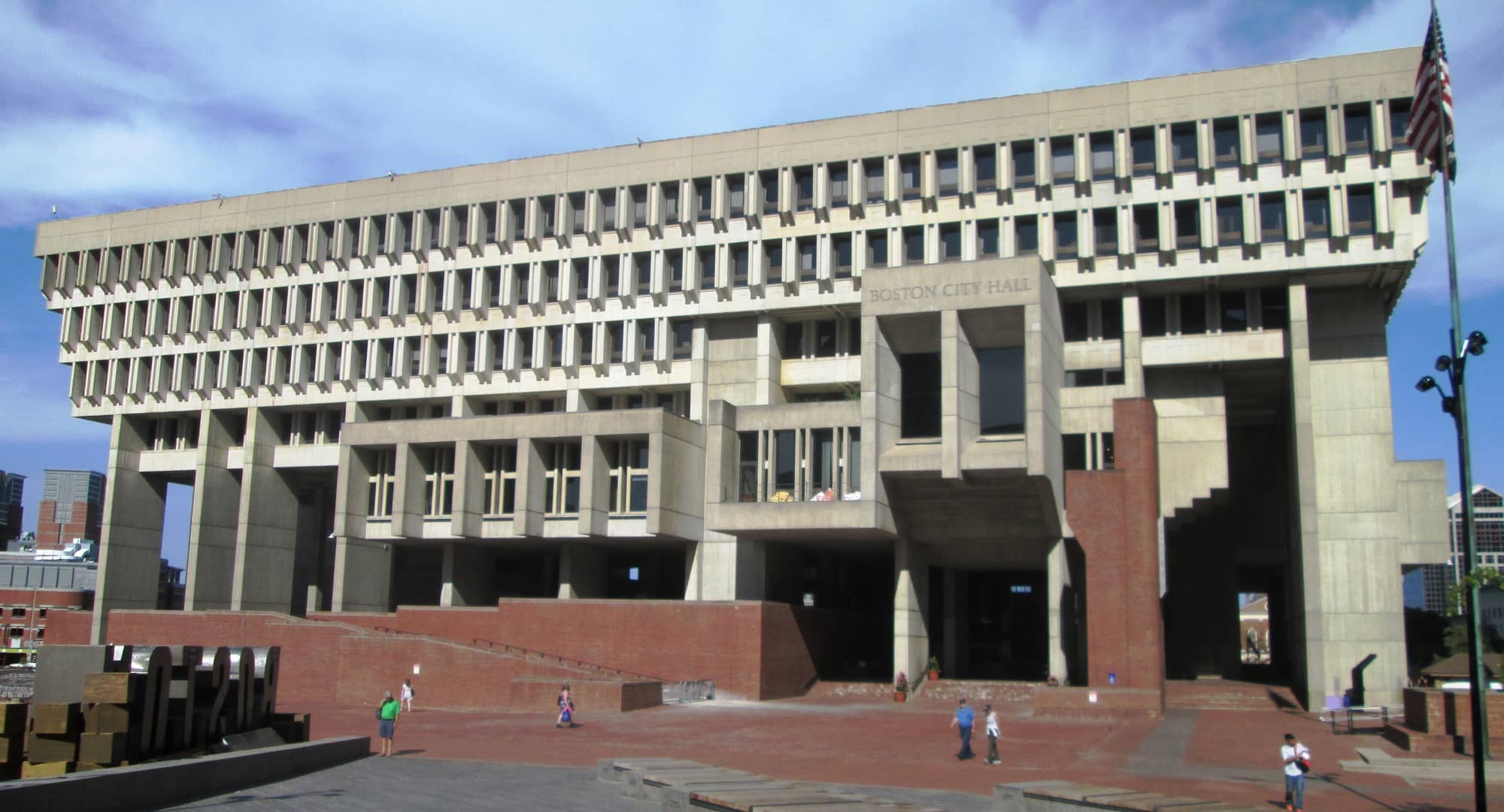
| Boston City Hall | Kallmann McKinnell & Knowles with Campbell, Aldrich & Nulty | Occupied 1967–69 | Boston, Massachusetts |
| St. Basil Catholic Church | A. C. Martin & Associates | 1969 | Los Angeles |
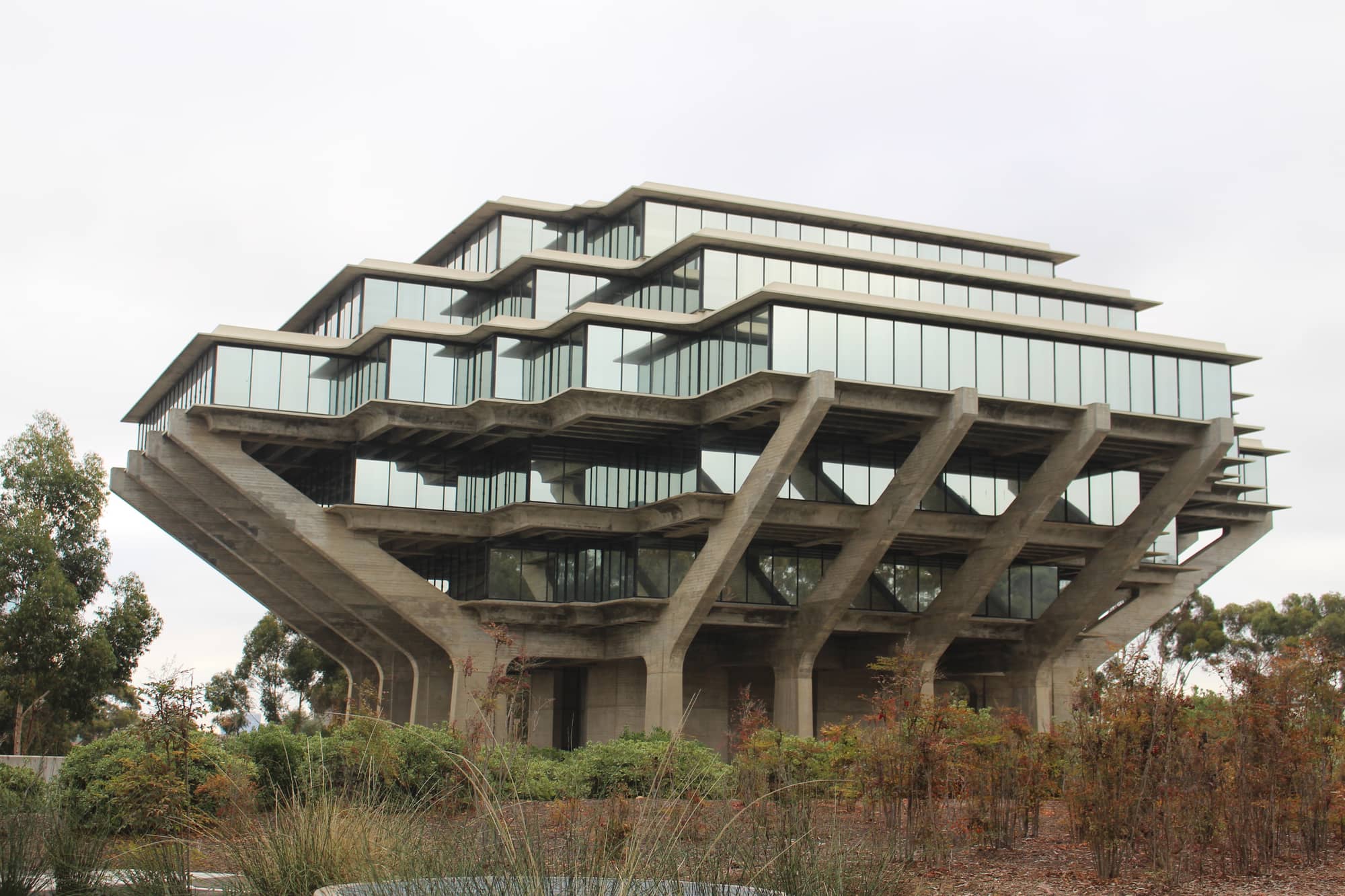
| Geisel Library, UC San Diego | William Pereira | 1970 | San Diego, California |
| Sunkist Headquarters | A. C. Martin & Associates | 1970 | Sherman Oaks, Los Angeles |
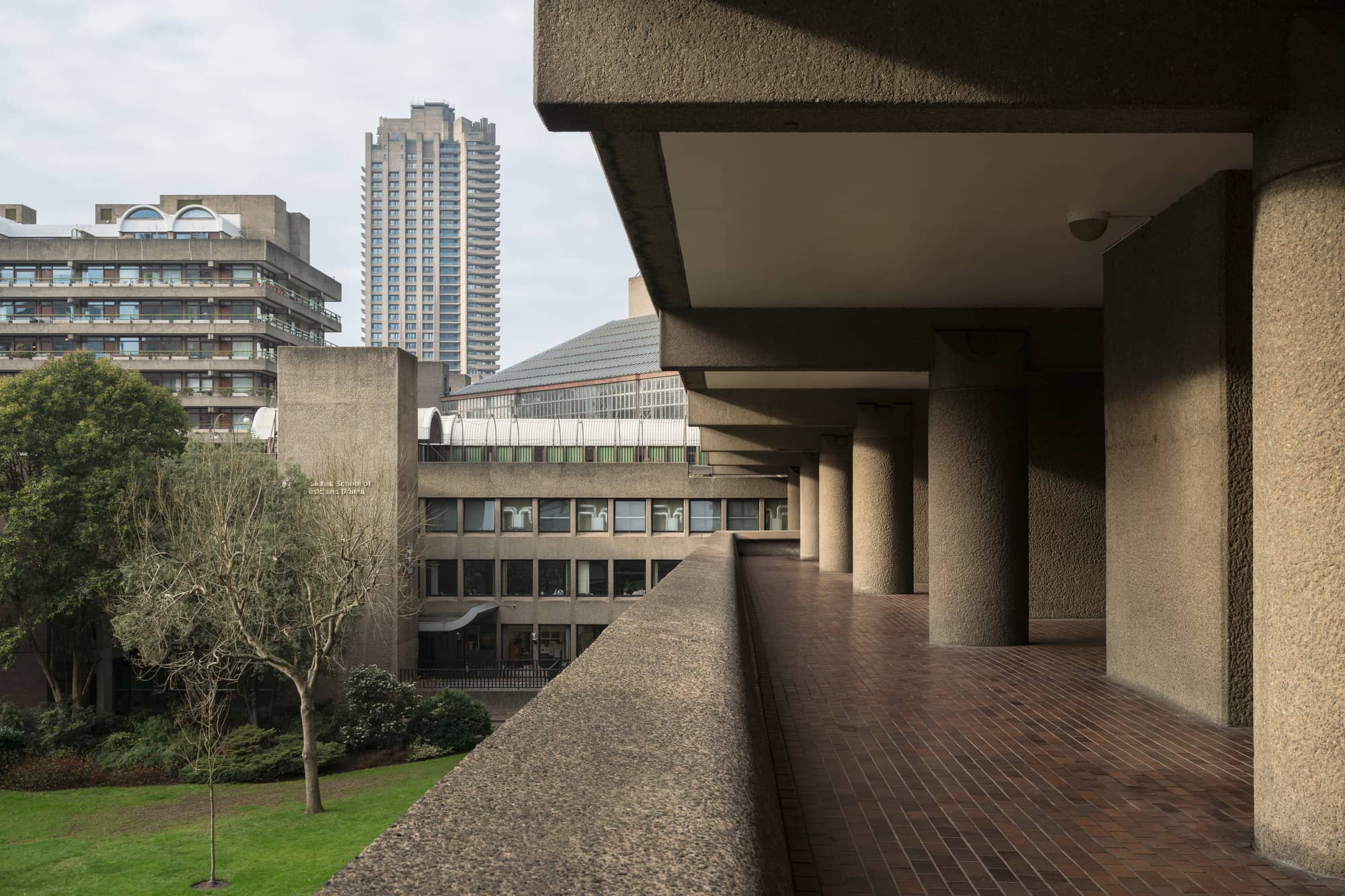
| Trellick Tower | Ernő Goldfinger | 1972 | London |
Why brutalist architecture is trending now
The evidence comes from several directions at once.
- Search. In the Journal's Google Trends check (US, monthly, 2021–2026), searches for "brutalist architecture" ran at 15–29 on Trends' relative scale through 2021, hit 100 in February 2025 and have run between about 29 and 48 through 2026. Autocomplete offers "brutalist architecture Los Angeles" as one of its first suggestions.
- Film. The peak lines up with The Brutalist, Brady Corbet's film about a Hungarian-Jewish architect in America, which earned ten nominations at the 97th Academy Awards in 2025 and won three, including Best Actor for Adrien Brody.
- Museums and schools. The world's first museum devoted to brutalist architecture is to open in 2027 in the hexagonal assembly hall of the Acland Burghley School in north London, a 1968 building by Howell Killick Partridge & Amis, according to Architectural Record. Harvard's GSD gave the style a whole exhibition in 2024.
- New buildings. An August 2025 essay republished by Portside argues that a new generation is building in the manner of the 1950s–70s, a "neobrutalism", citing UTEC in Lima, completed in 2015.
- The magazines. On 3 October 2026, Dezeen ran a roundup of ten monumental brutalist buildings in Asia, and this week's Journal trend report found readers returning to mid-century masters.
There is a catch the revival tends to skip, and the Portside essay names it: the cement industry alone is responsible for about 7% of humanity's CO2 emissions. A new brutalism built of new concrete is hard to defend; a brutalism of keeping and reusing the concrete that already exists is much easier.
The LA angle: brutalist architecture in Los Angeles
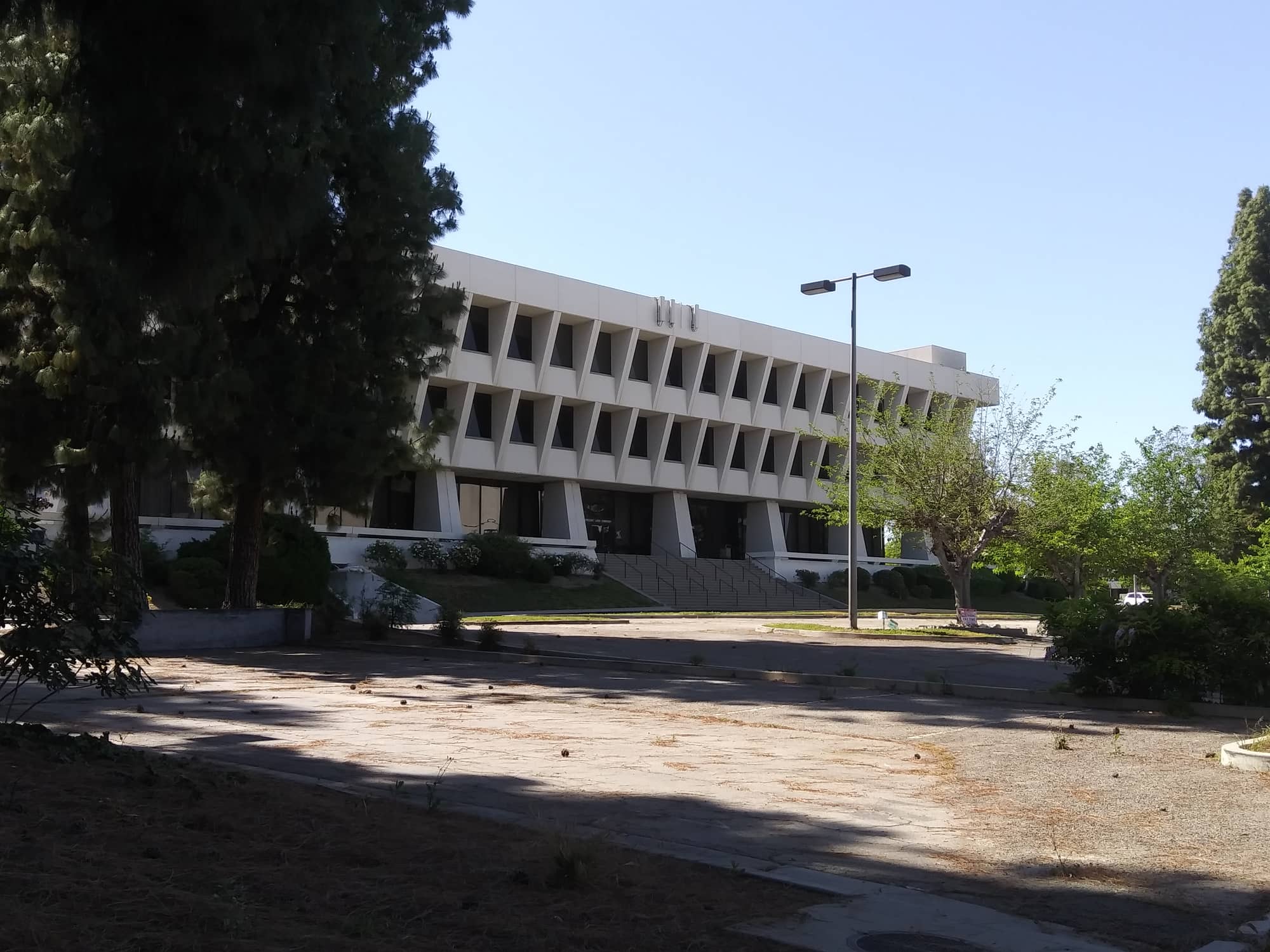
Los Angeles is not a brutalist city in the way Boston or London is, which makes its examples more precious. The most visible is the former Sunkist Headquarters in Sherman Oaks, beside the 101 Freeway, designed by A. C. Martin & Associates and completed in 1970. The Conservancy describes it as shaped somewhat like an inverted pyramid, wide at the top and tapering at the base, so that it appears to balance on concrete legs, with deeply recessed windows between tapered piers. Its off-white concrete makes it lighter than most brutalist buildings; the Conservancy compares it to an orange crate, turned upside down.
The building has been empty since 2015, according to Building Design + Construction. The city's Cultural Heritage Commission recommended it for Historic-Cultural Monument status on 15 January 2026, and it is now a designated monument, slated for conversion to housing under the city's new Citywide Adaptive Reuse Ordinance, among the first projects to use it. It is the same argument the Journal made about Mel's Drive-In Santa Monica: keep the landmark, and put the homes around and inside it.
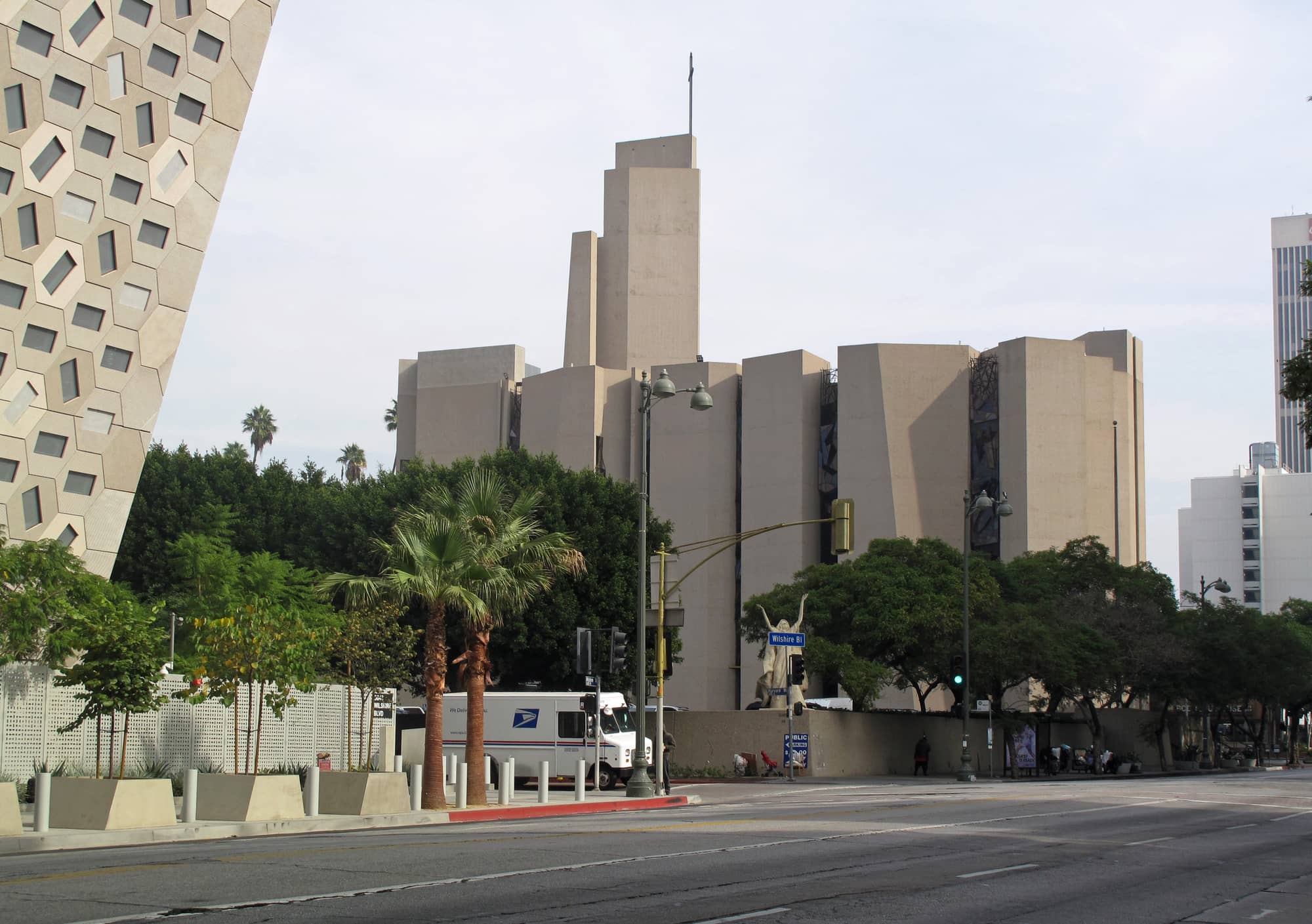
The other essential LA stop is St. Basil Catholic Church at 3611 Wilshire Boulevard, also by A. C. Martin & Associates, from 1969. Its twelve angular concrete towers, finished rough to expose the aggregate, are laced together with stained glass by Claire Falkenstein. When it opened, the Conservancy notes, Chicano community members protested that its $3 million cost was an extravagance at a time of widespread poverty in the archdiocese. Brutalism has always been political.
How to use brutalism in studio
Brutalism is easy to imitate badly: grey boxes and heavy overhangs. To use it well, go back to Banham's three tests.
- Make it memorable as an image. Draw the one silhouette you want people to remember, like Sunkist's inverted pyramid.
- Show the structure. Let the section explain how the building stands: piers, beams and slabs you can read from outside.
- Use materials "as found". Let a material show where it came from: board-marked concrete, reclaimed brick, or an existing structure kept as it is.
The third test is the one that makes brutalism newly relevant. "As found" once meant raw concrete. Today it can mean the building already on your site. For more on styles, studio life and student guides, see the Journal's Architecture School section.
FAQ
What is brutalist architecture?
Brutalist architecture is a postwar style, emerging in Britain in the 1950s, that shows its bare materials and structure, usually exposed concrete or brick, in heavy, angular, repetitive forms rather than applied decoration.
Why is brutalism called brutalism?
Brutalism is called brutalism after "new brutalism", from the Swedish nybrutalism, coined by Hans Asplund in 1950. The critic Reyner Banham popularised it in 1955 and linked it to béton brut, French for raw concrete. It does not mean brutal.
Where can I see brutalist architecture in Los Angeles?
Brutalist architecture in Los Angeles includes the former Sunkist headquarters in Sherman Oaks (1970), a Historic-Cultural Monument since 2026, and St. Basil Catholic Church on Wilshire Boulevard (1969), both by A. C. Martin & Associates.
Sources
- Brutalist architectureWikipedia
- Towards a Newer Brutalism: Solar Pavilions, Appliance Houses, and other Topologies of Contemporary LifeHarvard Graduate School of Design
- Sunkist HeadquartersLos Angeles Conservancy
- St. Basil Catholic ChurchLos Angeles Conservancy
- Former Sunkist Corporate Headquarters in Los Angeles designated historic-cultural monumentBuilding Design + Construction
- Museum of Brutalist Architecture to open at London's Acland Burghley SchoolArchitectural Record
- Brutalism is backPortside (from Jacobin)
- The BrutalistWikipedia
- Rudolph HallWikipedia
- Boston City HallWikipedia
- Geisel LibraryWikipedia